Tag Archives: writing

Mark Caserta: Military Superiority is no longer enough to protect the U.S.

23 Nov

The battlefield has been leveled in the new world of technology
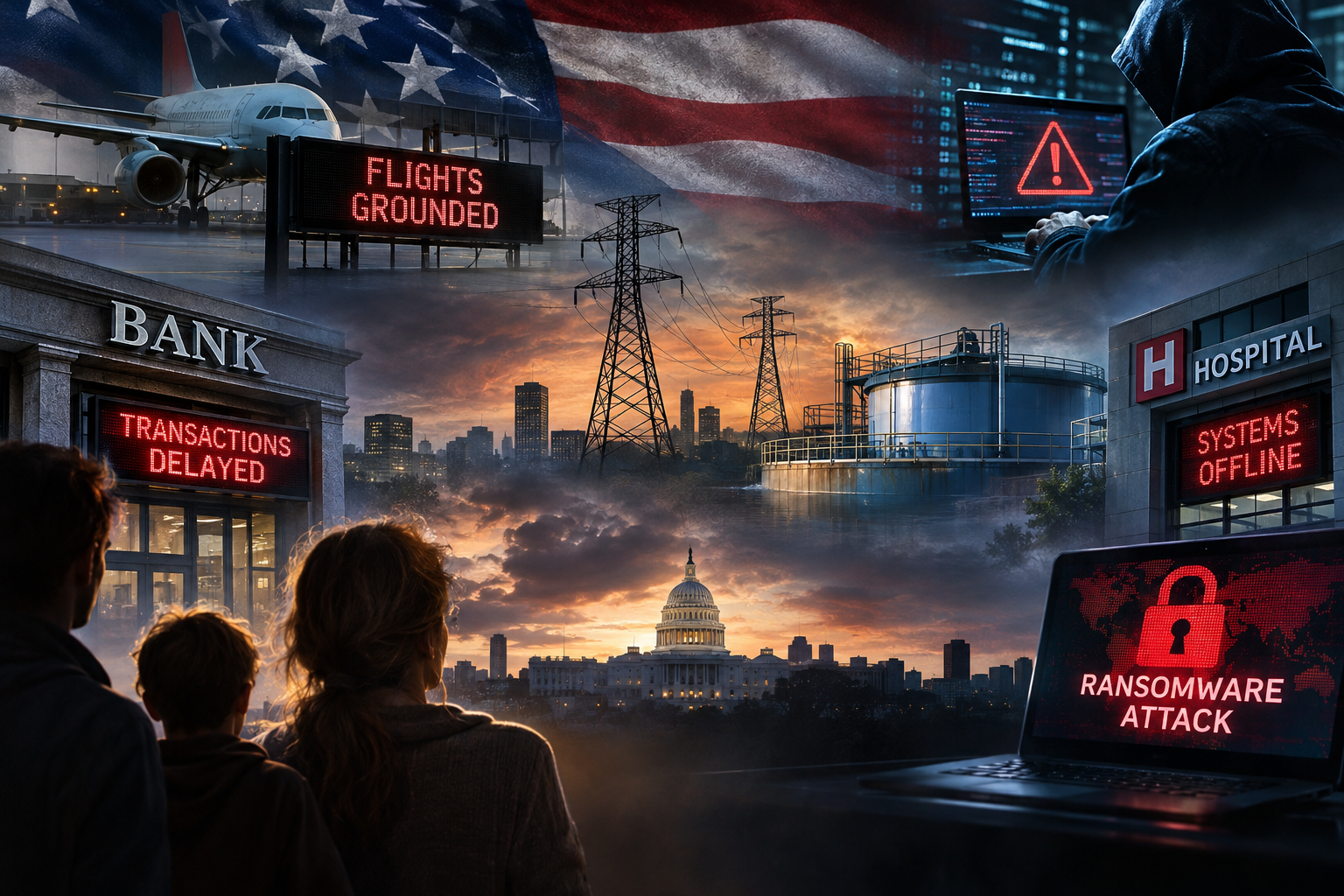
Recently, Americans witnessed a troubling series of technological failures involving air travel, banking, and internet services. Flights were grounded, transactions delayed, and communications disrupted.

Government officials say these incidents were unrelated technical failures, not coordinated cyberattacks. While coincidental, let’s accept that explanation.

But perhaps we are asking the wrong question. Rather than asking whether these incidents were coordinated attacks, shouldn’t we ask what would happen if they were?

For generations, America has maintained the most powerful military force in the world. Any nation contemplating a conventional confrontation with the United States faces potentially devastating consequences.

But America’s enemies understand something else. In today’s world, military superiority no longer guarantees national security.

September 11, 2001, demonstrated how a small group of terrorists could exploit vulnerabilities, kill thousands of Americans, and change our nation forever.

Then came COVID-19. Regardless of its still-disputed origins, the pandemic demonstrated how vulnerable the United States and the Western world could become in a biological emergency.

More than 1.1 million Americans died from COVID-19, nearly three times the 405,399 American military deaths during World War II. The comparison is staggering — and terrifying.

In just its first few years, COVID-19 inflicted a devastating human and economic toll. Businesses closed, schools emptied, churches suspended services, and hospitals struggled.  Some institution’s operations were altered for life!

The world’s most powerful nation had been brought to a virtual standstill, without a single enemy soldier crossing our borders.

Now consider another emerging vulnerability: cyber warfare.

In July, federal authorities warned that malicious cyber actors had targeted water and wastewater utilities in at least seven states.

In September 2025, a ransomware attack against an aviation technology provider disrupted airport operations across Europe, forcing cancellations and manual check-ins.

These were not hypothetical threats. They exposed weaknesses in systems upon which millions depend.

Artificial intelligence introduces another troubling dynamic.  Cyberattacks may now be launched, adapted, and intensified at speeds no human response can match.

America’s overwhelming conventional military superiority may offer little protection against an adversary capable of disrupting critical infrastructure in seconds.

Consider how interconnected our essential services have become. Our financial institutions depend upon communications networks and electricity. Hospitals depend upon digital records and reliable power. Water treatment facilities rely upon automated controls. Transportation networks depend upon computers and communications.

Disrupt one system, and others suffer. Disrupt several at once, and the consequences become far more frightening.

Imagine coordinated attacks on electrical grids in several states, water supplies, banking networks, and internet communications. Add a biological emergency at the same time.

How would Americans purchase food or gasoline? How would hospitals function? How would emergency responders communicate? How would families obtain reliable information?

And perhaps most importantly, how quickly could panic overwhelm the systems intended to protect us? This is not a prediction. It is a question of national preparedness.

We spend extraordinary resources on weapons to defeat enemies thousands of miles away. Yet the infrastructure supporting everyday American life remains exposed.

Our national security strategy must anticipate simultaneous threats, modernize aging systems, and keep essential services running when technology fails.

The underlying and possibly, most important question is who do Americans want in leadership if such a crisis occurred — when political rhetoric would mean very little.

The country would need leaders committed to protecting American lives, preserving constitutional freedoms, communicating truthfully, and making difficult decisions under pressure.

Patriotism must be demonstrated through preparedness, responsibility, and commitment to our nation’s history and values.  Leadership and the ability to make decisions responsibly for all Americans is crucial.  The lives of all Americans would be at stake.

America’s enemies may never possess the military strength to defeat us on a conventional battlefield, but in this new world, they may not need to.

The next great threat could arrive without missiles, armies, or a declaration of war. It could begin with the disappearance of the systems we take for granted.

The time to prepare for this frightening chaos is upon us, if not already passed.

Leaders have a responsibility to work together and protect our country from all invaders, both foreign and domestic.  And we choose our leaders.

Who do you want in charge when this threat is at your door?

Mark Caserta: When It Comes to Education, Our Children Are Not Political Pawns

17 Oct

We should all find it disturbing that while the very future of our nation is at stake in educating our children, politicians, lobbyists, and special interest organizations are weaponizing education for political advantage.

Our classrooms are not ideological battlefields, and our education funding should never become a weapon used to divide our nation. Public, private, Christian, and home education should all share one overriding objective: preparing our children to succeed in life.

They must all succeed!

There should be no political winners and losers when it comes to educating our children. Public education is essential. Private and Christian schools provide meaningful alternatives. Homeschooling gives parents another opportunity to meet their children’s individual needs.

Every approach deserves respect, and every taxpayer-supported program deserves transparency, appropriate oversight, and accountability.

Public education must succeed. More than eight out of every ten schoolchildren in America are served by our public school system. Its importance to our nation’s future cannot be overstated. Public school funding and teachers’ salaries and benefits must be protected and provide incentives for performing one of the most difficult and important jobs in our nation!

Many families are extremely happy with their local public schools; others simply cannot afford another choice. But while there are public schools that are successful and highly respected in some communities, national educational results remain a concern despite the money allocated.

The U.S. is among the world’s largest spenders on public education. In fiscal year 2024, the U.S. spent more than $983 billion on public K–12 education, including pre-K, with annual operating expenditures of $17,619 per pupil. So, money alone is not the problem.

And let’s be clear. Teachers are also not the problem. As in any profession, teaching skills and abilities vary, but few enter the profession expecting financial riches. Most are motivated by a genuine love for children and a desire to help shape their futures. We should honor, respect, and support those who dedicate their lives to educating our children.

The answers must be found through a broader examination of our educational system. Curriculum, classroom size, student nutrition, parental involvement, classroom discipline, administrative costs, and the resources available to teachers all deserve thoughtful analysis. We must be willing to identify what works, acknowledge what doesn’t, and make meaningful improvements.

Parents must also have a choice in the education of their children. Absolutely no one knows a child better than a caring parent.

Private and Christian schools must also succeed in preparing our children for their futures. Adequate resources should be available to families who choose an educational setting outside the public school system. However, those resources should not come at the expense of our public schools. They should be responsibly appropriated, with transparency, meaningful oversight, and an unwavering commitment to providing every child with a quality education.

West Virginia’s Hope Scholarship has played an important role in expanding educational opportunities for families, allowing parents greater freedom to choose the educational environment they believe best meets their child’s individual needs.

And God bless the parents who choose to take such an essential, hands-on role in their children’s education through homeschooling. I can think of few greater commitments of time, resources, and personal sacrifice than that of a parent who assumes the responsibility of educating their children while managing the demands of a busy household.

These parents devote countless hours to providing instruction through thoughtfully selected curricula, often creating learning environments tailored to their children’s individual abilities, interests, and needs.

Once again, West Virginia’s Hope Scholarship has played an important role in helping eligible families access the resources necessary to make this educational choice possible.

America’s educational future should not be determined by whether a child attends a public school, private school, Christian school, or is educated at home. Each offers opportunities for academic achievement. The challenge is not to determine which institution deserves to survive, but to ensure that every child has an opportunity to succeed.

Public education must succeed. Supporting other educational options does not diminish its importance.

Parental choice also matters. Families should have meaningful options, including public, private, Christian, and homeschooling.

Teachers deserve support through competitive compensation, recruitment and retention initiatives, and responsible, sustainable funding.

We should measure educational success by what children learn, not simply by which type of school they attend. And funding for one form of education should never come at the expense of another equally valuable means of educating our children.

Every educational approach deserves the resources necessary to succeed, accompanied by transparency, meaningful oversight, and accountability for results.