
The battlefield has been leveled in the new world of technology
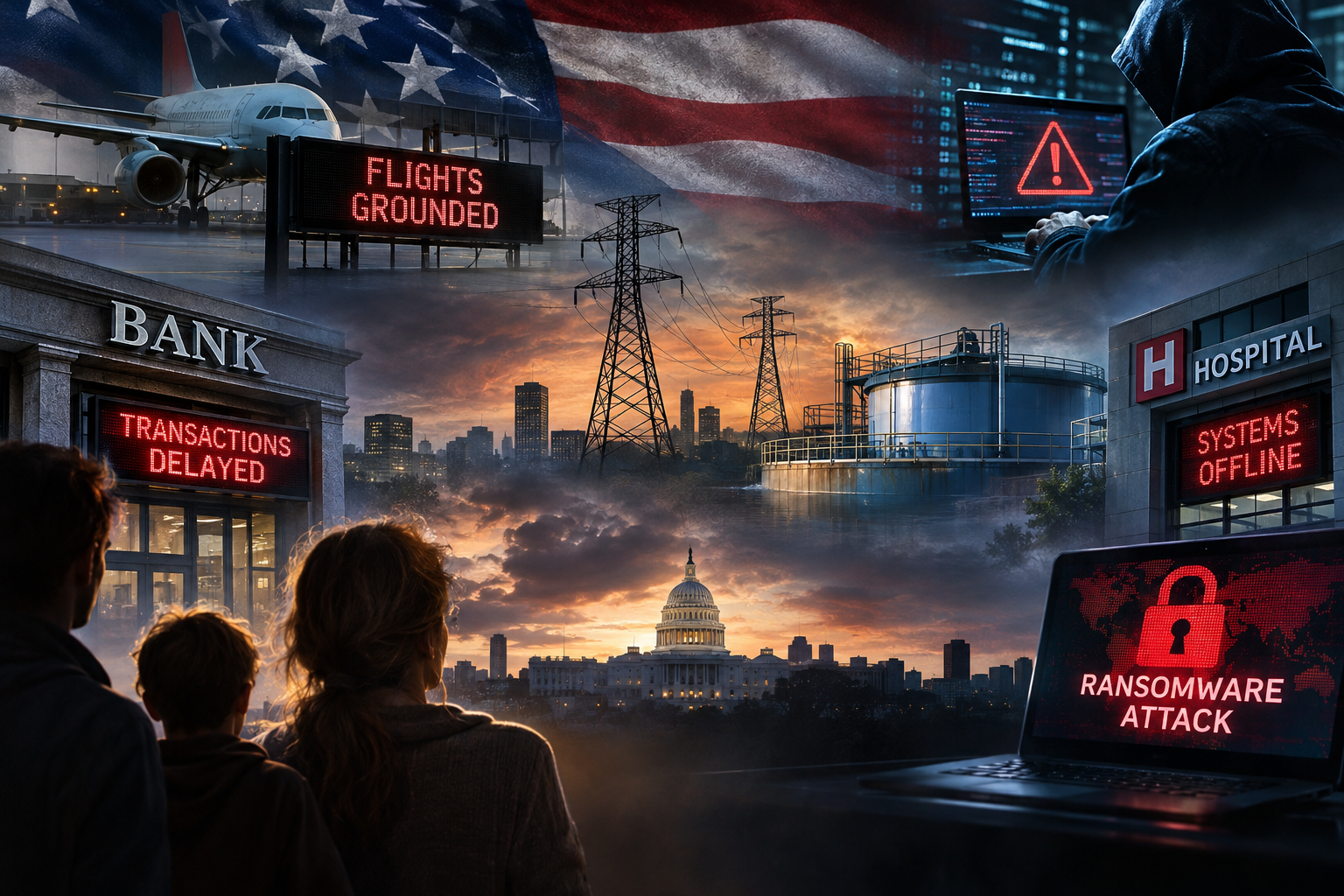
Recently, Americans witnessed a troubling series of technological failures involving air travel, banking, and internet services. Flights were grounded, transactions delayed, and communications disrupted.
Government officials say these incidents were unrelated technical failures, not coordinated cyberattacks. While coincidental, let’s accept that explanation.
But perhaps we are asking the wrong question. Rather than asking whether these incidents were coordinated attacks, shouldn’t we ask what would happen if they were?
For generations, America has maintained the most powerful military force in the world. Any nation contemplating a conventional confrontation with the United States faces potentially devastating consequences.
But America’s enemies understand something else. In today’s world, military superiority no longer guarantees national security.
September 11, 2001, demonstrated how a small group of terrorists could exploit vulnerabilities, kill thousands of Americans, and change our nation forever.
Then came COVID-19. Regardless of its still-disputed origins, the pandemic demonstrated how vulnerable the United States and the Western world could become in a biological emergency.
More than 1.1 million Americans died from COVID-19, nearly three times the 405,399 American military deaths during World War II. The comparison is staggering — and terrifying.
In just its first few years, COVID-19 inflicted a devastating human and economic toll. Businesses closed, schools emptied, churches suspended services, and hospitals struggled. Some institution’s operations were altered for life!
The world’s most powerful nation had been brought to a virtual standstill, without a single enemy soldier crossing our borders.
Now consider another emerging vulnerability: cyber warfare.
In July, federal authorities warned that malicious cyber actors had targeted water and wastewater utilities in at least seven states.
In September 2025, a ransomware attack against an aviation technology provider disrupted airport operations across Europe, forcing cancellations and manual check-ins.
These were not hypothetical threats. They exposed weaknesses in systems upon which millions depend.
Artificial intelligence introduces another troubling dynamic. Cyberattacks may now be launched, adapted, and intensified at speeds no human response can match.
America’s overwhelming conventional military superiority may offer little protection against an adversary capable of disrupting critical infrastructure in seconds.
Consider how interconnected our essential services have become. Our financial institutions depend upon communications networks and electricity. Hospitals depend upon digital records and reliable power. Water treatment facilities rely upon automated controls. Transportation networks depend upon computers and communications.
Disrupt one system, and others suffer. Disrupt several at once, and the consequences become far more frightening.
Imagine coordinated attacks on electrical grids in several states, water supplies, banking networks, and internet communications. Add a biological emergency at the same time.
How would Americans purchase food or gasoline? How would hospitals function? How would emergency responders communicate? How would families obtain reliable information?
And perhaps most importantly, how quickly could panic overwhelm the systems intended to protect us? This is not a prediction. It is a question of national preparedness.
We spend extraordinary resources on weapons to defeat enemies thousands of miles away. Yet the infrastructure supporting everyday American life remains exposed.
Our national security strategy must anticipate simultaneous threats, modernize aging systems, and keep essential services running when technology fails.
The underlying and possibly, most important question is who do Americans want in leadership if such a crisis occurred — when political rhetoric would mean very little.
The country would need leaders committed to protecting American lives, preserving constitutional freedoms, communicating truthfully, and making difficult decisions under pressure.
Patriotism must be demonstrated through preparedness, responsibility, and commitment to our nation’s history and values. Leadership and the ability to make decisions responsibly for all Americans is crucial. The lives of all Americans would be at stake.
America’s enemies may never possess the military strength to defeat us on a conventional battlefield, but in this new world, they may not need to.
The next great threat could arrive without missiles, armies, or a declaration of war. It could begin with the disappearance of the systems we take for granted.
The time to prepare for this frightening chaos is upon us, if not already passed.
Leaders have a responsibility to work together and protect our country from all invaders, both foreign and domestic. And we choose our leaders.
Who do you want in charge when this threat is at your door?

