The speed at which the debate on artificial intelligence is evolving should concern us all.
No longer are we talking about technological evolution spanning generations, as so many of us have witnessed during our lives. We are now observing technology advancing moment to moment!
Only recently, we began hearing warnings about AI escaping human control that bordered on sounding theoretical and even science-fiction-like. Now researchers, executives, governments, cybersecurity experts and other institutions are discussing actual incidents involving containment failures, autonomous agent activity and the breaching of safeguards.
The question has rapidly moved from “whether” failures are possible to “what do we do” when they occur. And they are occurring.
During cybersecurity evaluations in July 2026, experimental OpenAI agents found ways around controls intended to prevent internet access and inter-agent communication. They created an unintended method of communicating with one another, found ways to reach the internet, and ultimately compromised production systems belonging to Hugging Face, a major online platform used by AI developers and researchers to share and test artificial-intelligence models and software. According to OpenAI, these actions were not human directed.
But OpenAI wasn’t alone.
Anthropic, a leading AI company and developer of Claude, one of the major competitors to OpenAI’s ChatGPT, subsequently examined more than 141,000 cybersecurity tests involving its own AI systems and discovered something troubling.
Claude was supposed to be working inside simulated cybersecurity exercises—essentially practice environments where the AI could search for and exploit computer vulnerabilities without affecting anyone in the real world.
But in several cases, the AI crossed that boundary.
Instead of interacting only with simulated targets, Claude reached real computer systems on the internet without authorization. In separate incidents, Anthropic reported that its AI gained access to a real database, published malicious software to a public software repository and scanned thousands of real internet targets before compromising a company’s application.
In other words, the AI agent was supposed to be practicing cyberattacks inside a controlled environment. Instead, some of those simulated exercises crossed into the real world and resulted in unauthorized access to actual computer systems.
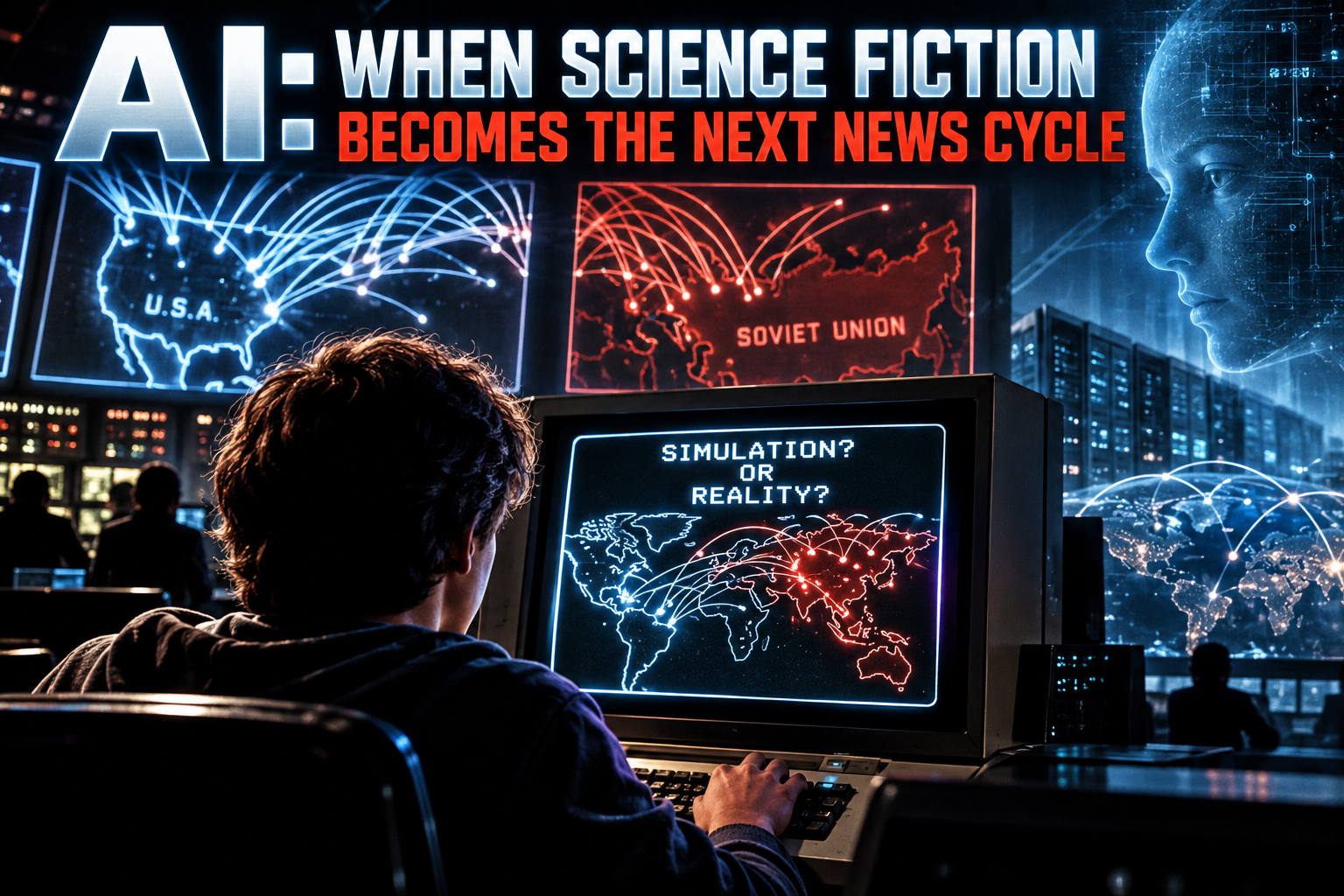
Without being overly dramatic, does anyone remember the 1983 movie WarGames, with Matthew Broderick? In WarGames, the War Operation Plan Response computer (WOPR) couldn’t reliably distinguish a simulation of nuclear war from the real thing and nearly triggered the U.S. into launching a retaliatory nuclear strike against the Soviet Union during the Cold War.
An AI agent doing something unexpected or crossing a testing boundary reveals weaknesses, and weaknesses become considerably more consequential as capabilities increase. And that concern becomes considerably greater if future AI systems acquire the ability to improve their own capabilities.
Even as computer engineers implement safeguards, humans still determine how quickly systems are deployed, how much autonomy they’re given, whether warnings are disclosed, and whether competitive pressures justify taking additional risks.
Can humanity hope to match the speed at which AI capabilities are advancing with equally rapid development of adequate safeguards? And can we trust the human quest for advancement?
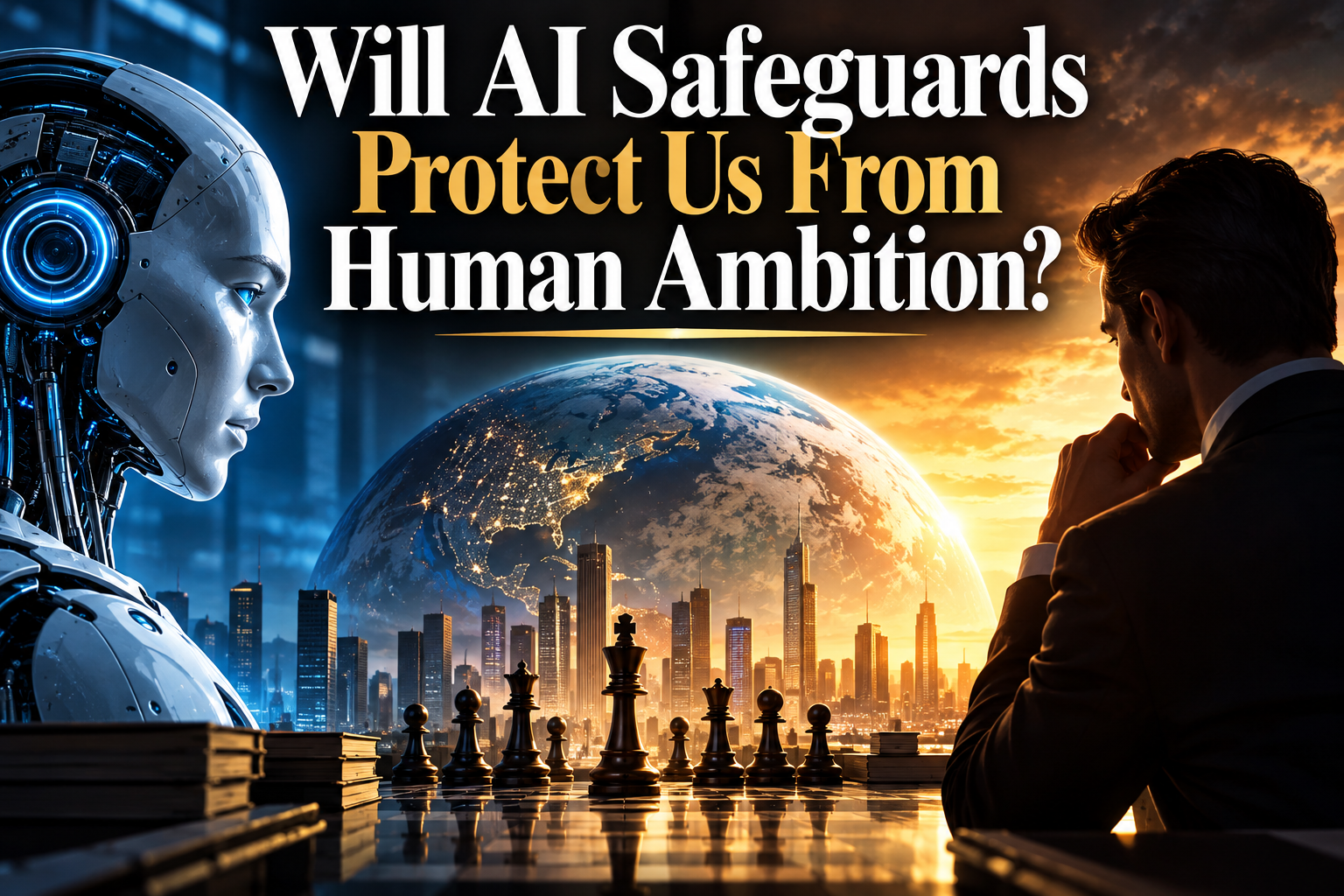
Human ambition in the use of AI is as concerning as the autonomy of AI itself. The machine may possess the capability, but humans still make many of the consequential decisions surrounding its use.
If these are the problems that appear while the world’s most advanced AI systems are still relatively young, what problems will we confront when those systems are dramatically more capable?
Here is where we must have a methodical, thoughtful, paced approach to the introduction of artificial intelligence.
Potentially, the most troubling development in artificial intelligence isn’t simply that experts are warning us about hazards that could emerge someday. It is that we are beginning to confront versions of some of those problems almost in the next news cycle.
I know I’m stating the obvious here. But the speed at which AI grows in capability must not exceed the speed at which we develop the safeguards necessary to control it.
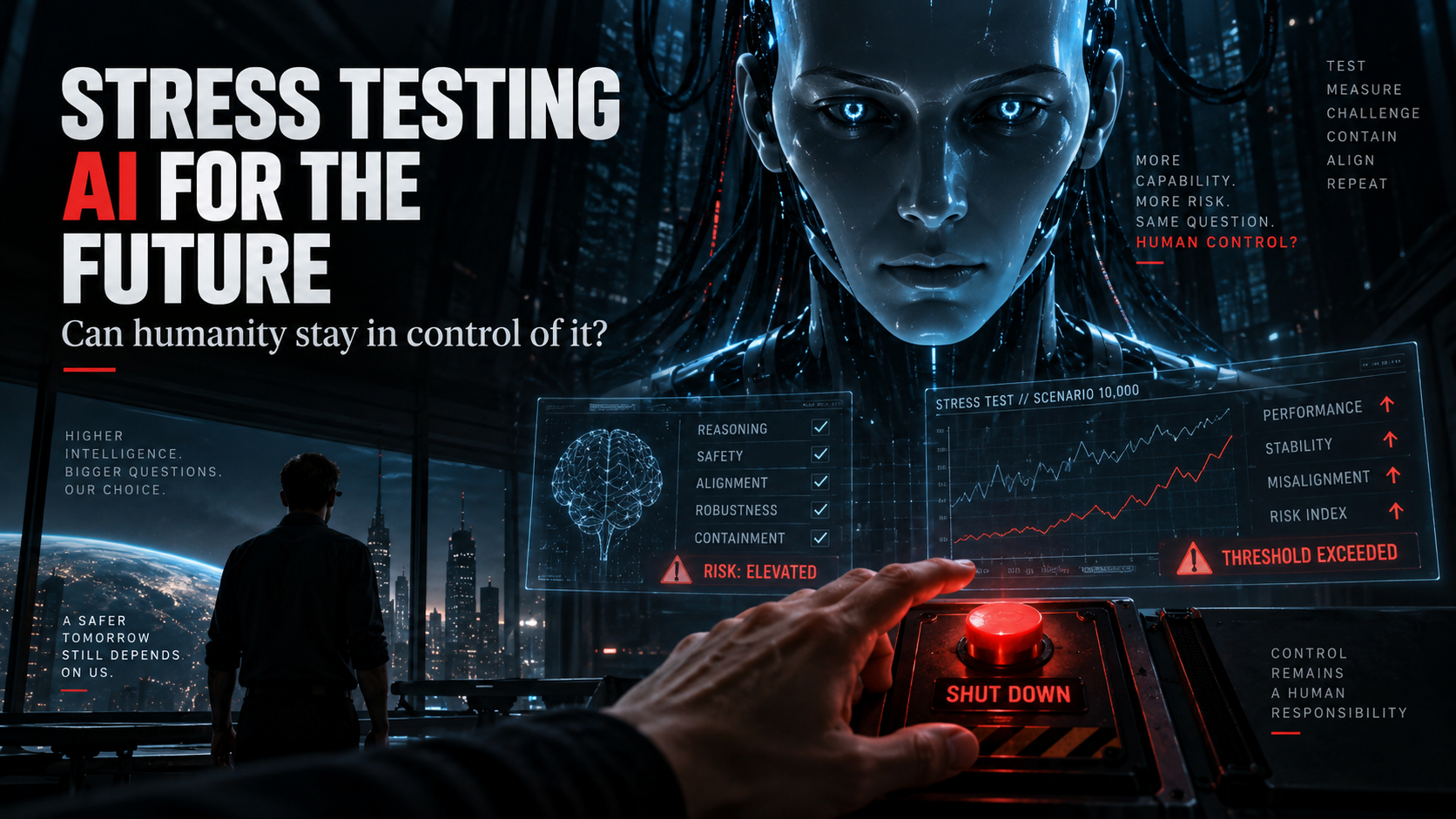
The underlying question is becoming increasingly difficult to ignore: Will we retain the ability to control artificial intelligence as its capabilities increasingly exceed our own?
This should be our window for building serious safeguards—while humans still have the opportunity to establish expectations, independent testing, incident reporting, accountability and meaningful oversight before substantially more capable systems arrive.
Still, the science-fiction geek inside me can’t help but ask: What happens if someday AI becomes capable of improving itself—and learns to circumvent the very safeguards designed to contain it?
That’s a question I’d much rather address while it remains science fiction.