Tag Archives: FREE STATE PATRIOT

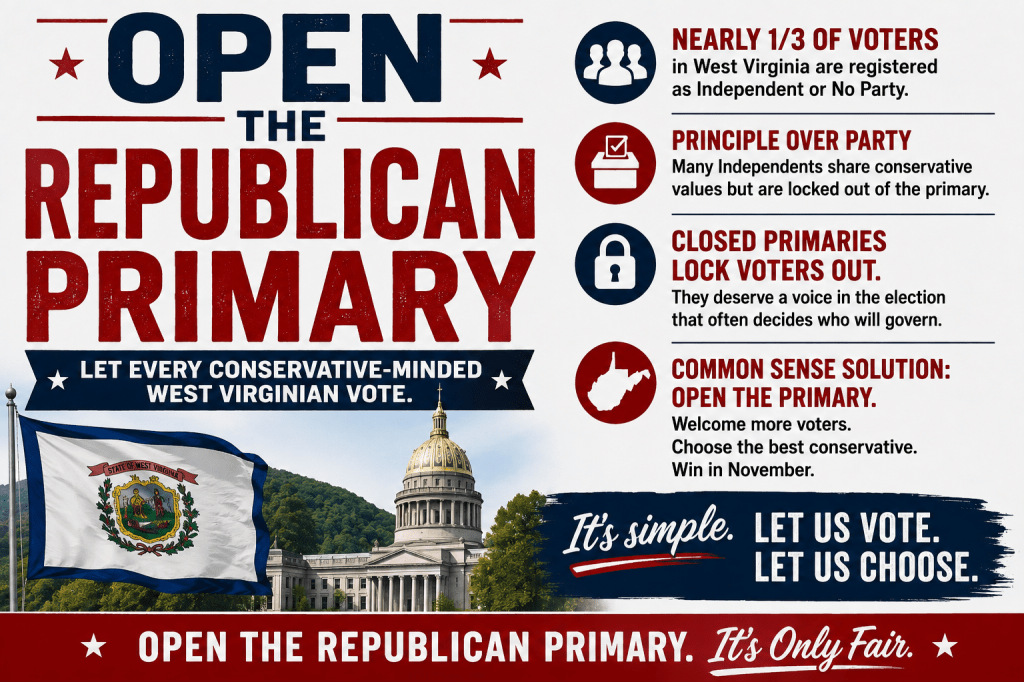
Mark Caserta: Open the Republican Primary — Don’t Close the Door on Common-Sense Conservatives

4 Aug

West Virginia has changed dramatically over the past two decades.

There was a time when a candidate almost had to be a Democrat to win statewide office. Today, the political landscape has flipped. In many races, the Republican primary has become the election that ultimately decides who will represent us.

That reality raises an important question:

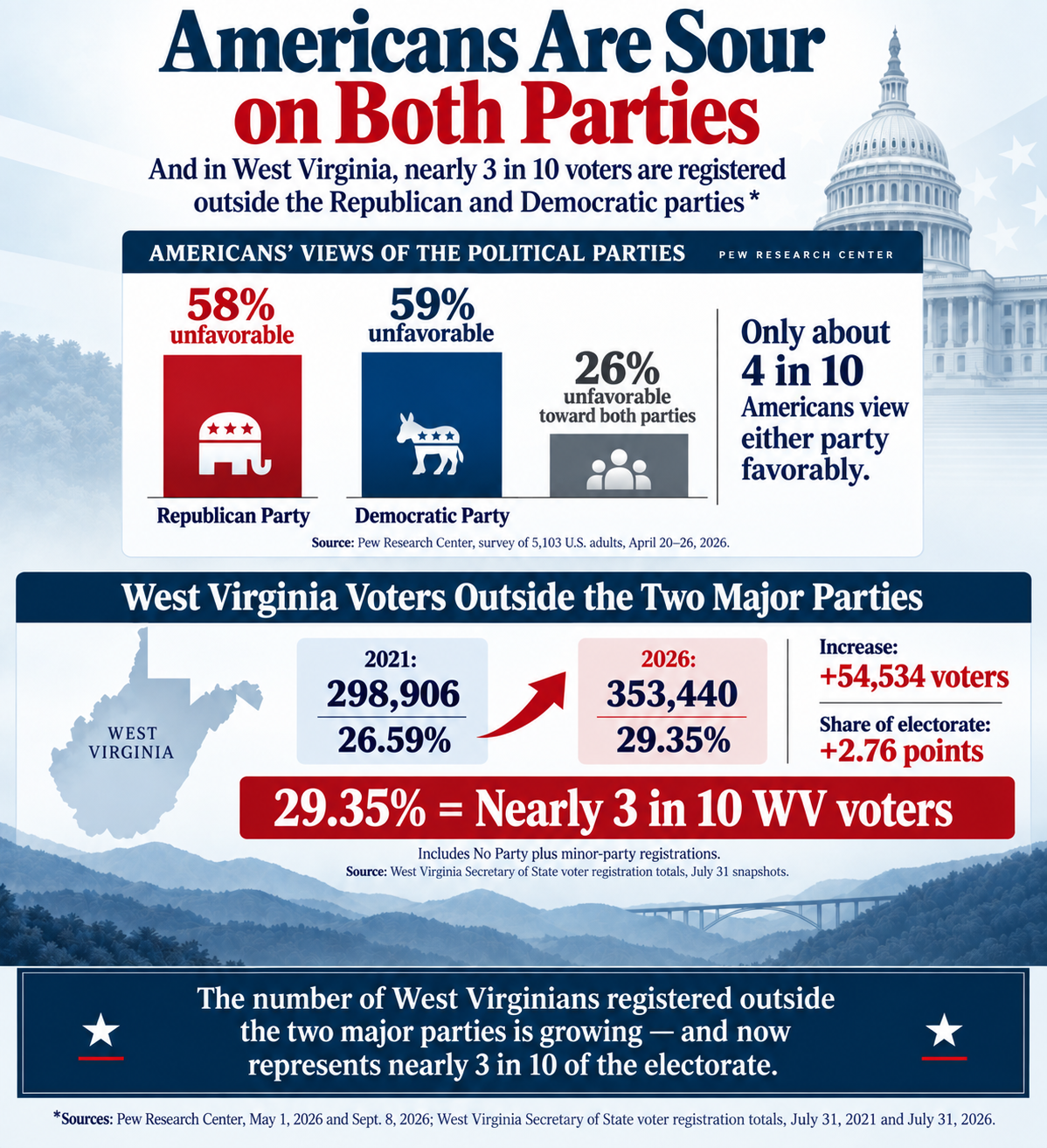
Should nearly one-third of West Virginia’s registered voters be locked out of the election that often determines who will govern them?

I don’t believe they should.

Choosing to register as an Independent isn’t necessarily a rejection of conservative values. For many people, it’s a decision to simply place principle above party. 

Many Independent voters are simply frustrated with both major political parties. They are hardworking, taxpaying West Virginians who believe in limited government, fiscal responsibility, individual liberty, and common sense. They simply don’t want a political label to define them.

Yet today, if those same citizens want to vote for the Republican candidate they believe best represents conservative, common sense values, they are told they cannot.

That doesn’t make much sense.

The argument for a closed Republican primary is that Democrats could cross over and intentionally vote for a weaker Republican candidate in hopes of making the general election easier to win.

I understand that concern. But where is the evidence that it is occurring on any meaningful scale in West Virginia?

More importantly, even if that possibility exists, should we punish thousands of Independent voters because of what might happen?

The practical effect of a closed primary is certain: thousands of Independent voters who share conservative values are denied a voice in choosing the Republican nominee.

During this year’s primary election, many Independent voters arrived at the polls expecting to vote for a Republican candidate, only to discover they couldn’t. Some left frustrated. Some left angry. Others simply accepted a Democrat ballot without even asking for one. 

Instead of creating new Republican voters, we created disappointed citizens.

Ask yourself this:

Is that really how we grow the conservative movement?

If someone consistently supports conservative ideas, believes in constitutional government, wants lower taxes, supports law enforcement, believes in personal responsibility, and shares our values, why should we tell them they are not welcome to help choose our nominee?

Political parties should earn support through sound ideas, principled leadership, and faithful representation—not by requiring voters to change their registration before they can participate.

If Republican ideas are truly the best ideas, we shouldn’t fear more conservative-minded voters participating in the process.

We should persuade them—not exclude them.

West Virginia’s voter registration has changed dramatically. 

The days when Democrats dominated our elections are gone. Today, many people who once identified as Democrats have become Republicans. Others have simply become Independents—not because they’ve abandoned conservative values, but because they’ve grown weary of partisan politics.

Ironically, some observers have noted that candidates with traditionally Democrat viewpoints have chosen to register as Republicans because that’s where today’s electoral advantage exists. 

Whether or not that’s widespread, it illustrates a larger point: party registration is no longer a reliable measure of a person’s beliefs!

What should matter is the principles they support—not the label beside their name.

I would also submit it’s worth asking a constitutional and fairness question.

Yes, courts have generally recognized a political party’s right to determine who may participate in its nominating process. 

But should a publicly funded election exclude thousands of taxpaying West Virginians from participating in the contest that, in many races, effectively decides who will represent them?

That isn’t just a legal question. It’s a question of good government, representative democracy, and plain common sense.

This is also a matter of political and mathematical reality.

We cannot lock out nearly one-third of the electorate and then expect those same voters to enthusiastically support our nominees in November. 

If our goal is to build a stronger Republican Party, we should be inviting conservative-minded Independents into the process—not pushing them away.  

There isn’t a single major political faction or campaign in America that would simply concede the independent vote. They absolutely know they need it to win!

Winning elections isn’t about building smaller circles.

It’s about building larger movements.

I believe it’s time for the West Virginia Republican Party to reconsider its decision and reopen its primary to unaffiliated voters.

Let’s compete for their votes.

Let’s earn their trust.

Let’s persuade them with conservative principles, constitutional and Biblical values, and strong candidates.

Because in the end, a stronger Republican Party won’t be built by locking people out.

It will be built by welcoming every freedom-loving West Virginian who wants to help shape our future.

Mark Caserta: Many Americans are literally giving our country away. Are you one of them?

30 Jul

Mark Caserta has been an opinion columnist for 26 years and was candidate for WV House of Delegates in Wayne County in 2026


Many Americans—including many Christians—are literally giving their country away.

Get angry with me if you want, but don’t complain about what you permit to happen.

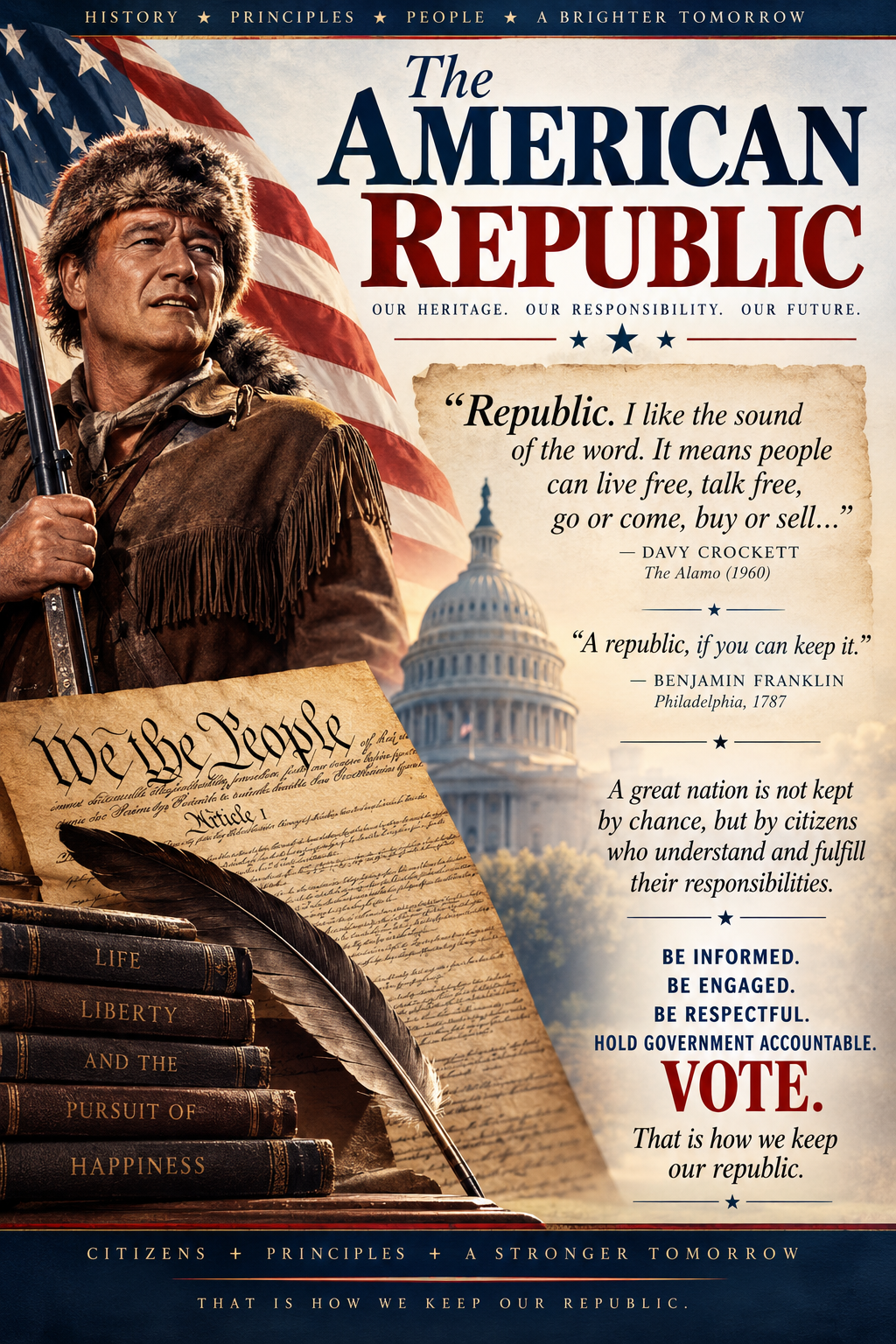
Voter apathy is killing our nation.

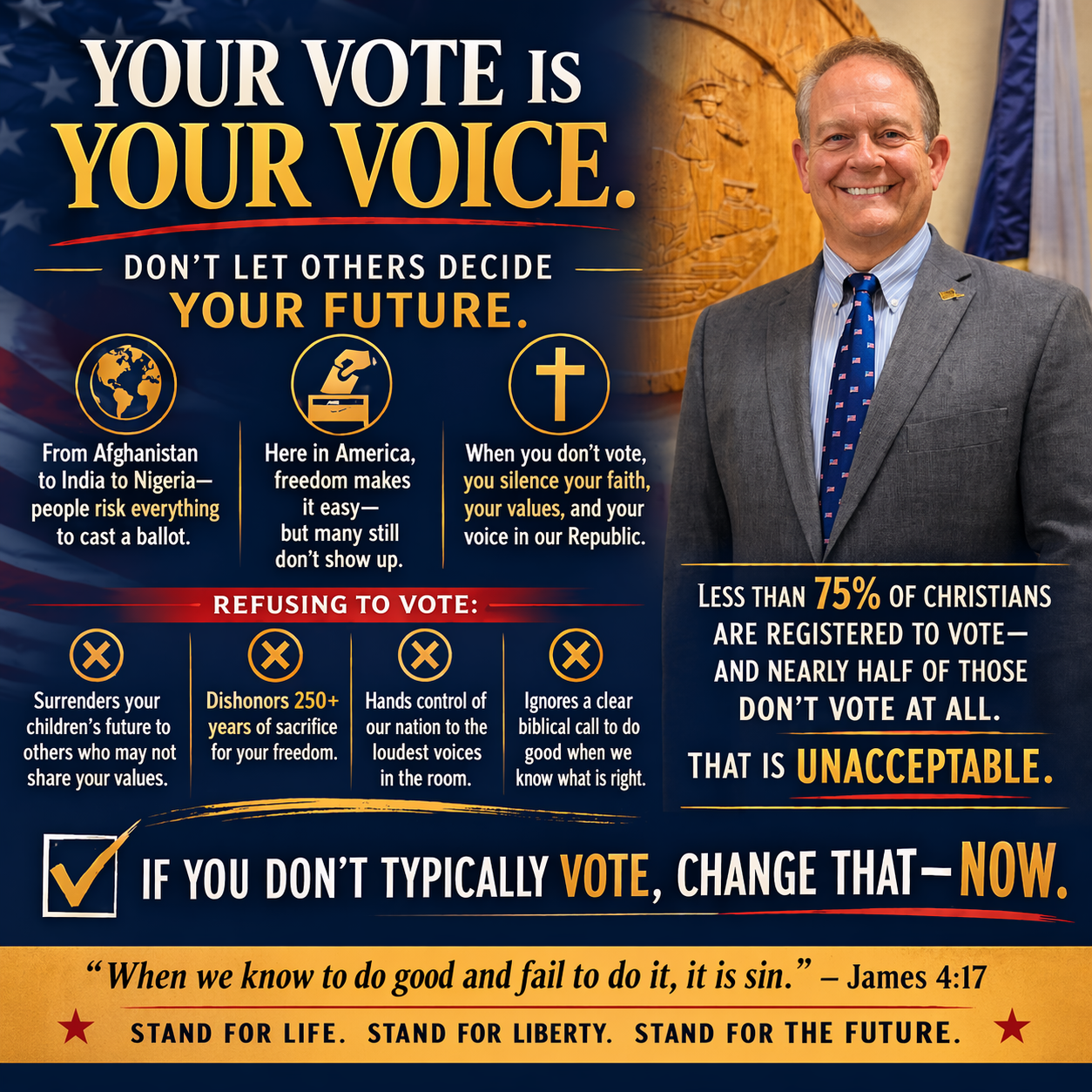
According to multiple sources, only about 75 percent of Christians are registered to vote. Remember, your vote is your voice.

Of those Christians who are registered, only an estimated 75 percent actually vote. That means, roughly speaking, only a little over 56 percent of those who identify as Christians cast a ballot. Turnout among the rest of the eligible voting population is even lower, which is equally troubling.

And that’s during a presidential election year. In off-year elections, voter participation drops even further.

Nearly every day, I talk with people who tell me they are sick of politics and have lost faith that their vote makes any difference.

Politicians bear a great deal of responsibility for that.

In a constitutional republic, elected officials work for the people. They are hired by the voters for one purpose: to represent their constituents.

Too many politicians have forgotten that. They say what they need to say to get elected, then spend their time advancing their own ideological agenda or that of their party’s leadership instead of faithfully representing the people who sent them to office.

So, how do we begin to change this?

I believe it starts with three simple steps:

1. Politicians must return to the foundational principle of our republic: represent the people who elected you—even when their views do not align perfectly with your own.

2. Congress should act to strengthen election integrity, including measures such as the SAVE Act, which supporters say would ensure that only American citizens vote in federal elections.

3. Every eligible voter—including every Christian—must study the candidates, make an informed decision, and vote.

Just as important, if your elected representative fails to do the job, fire them at the next election.

These ideas are not complicated. In fact, our Founding Fathers intentionally designed our system to be this straightforward.

I still believe there is hope for America.

But hope alone has never changed a nation.

Action does.

Mark Caserta: Millions of Americans relinquish their children’s future to total strangers.

18 Apr

I would never want to be asked by one of my grandchildren, “Papaw, why didn’t you vote?”

Millions of Americans have become so frustrated with politics that they simply refuse to vote. That doesn’t make them bad people—they’re just fed up. Many have resigned themselves to sitting on the sidelines, letting the chips fall where they may, adopting a “whatever will be, will be” attitude.

But if our Founding Fathers had taken that same approach, where would we be today?

That kind of indifference diminishes the sacrifice of the brave men and women who gave their lives to secure your right to vote—your right to express your faith, your conscience, and your beliefs in this Republic.

This dereliction of duty—and that’s exactly what it is—has been enabled by something dangerous: taking for granted the freedoms we enjoy in what is still the greatest nation on earth.

Consider this:

In countries like Afghanistan, voters risk terrorist attacks as they walk miles across dangerous terrain just to cast a ballot. The purple ink on their fingers marks them not only as voters—but as targets. And still, they show up.

In the remote regions of India, voters travel for hours—even days—through mountains and rural terrain. Election workers hike, cross rivers, and even use elephants to ensure every voice is heard. In fact, India has been known to set up polling stations for a single voter.

In Nigeria, citizens face threats from terrorist groups like Boko Haram. They stand in long lines under intense heat, often amid violence and disruption—yet turnout remains strong.

The list goes on.

Despite danger, hardship, and sacrifice, these people vote—because they understand something we too often forget: voting is their voice.

When you refuse to vote, you are placing your children’s future—and their children’s future—into the hands of others who may not share your values or priorities.

When you refuse to vote, you dismiss over 250 years of sacrifice made by those who fought and died to preserve your freedom.

When you refuse to vote, you surrender the direction of this nation—and your family’s future—to the loudest voices in the room.

History reminds us where that can lead. The loudest voices once cried out in Pilate’s court, choosing Barabbas over Jesus.

Consider this sobering reality: less than 75% of Christians in America are even registered to vote, and nearly half of those who are registered do not vote at all. That means tens of millions of Christians are completely absent from the process.

Forgive me, but that is unacceptable.

We have a responsibility to advance the future, protect the opportunities, and safeguard the freedoms of those who come after us—just as those before us did for us.

Scripture tells us that when we know to do good and fail to do it, for us, it is sin.

What clearer good can there be than standing up for life, liberty, and the pursuit of happiness?

If you don’t typically vote, change that—now.

I would never want to be asked by one of my grandchildren, “Papaw, why didn’t you vote?”

The thought of that breaks my heart.

Mark Caserta: President Trump shows leadership with attack on Iranian military capability; not only for U.S. but for Israel.

1 Mar

And he was well within his power as commander-in-chief to do so.

Let’s cut through the emotional responses from those more focused on President Trump’s shortcomings versus his successes, which is unfortunate. Despite presidents and legislators espousing for decades that Iran must not become a nuclear power and that we must protect our ally, Israel, President Trump showed leadership in making it happen.

And while the Iranian people celebrate, Democrat politicians choose, once again, to posture politically against Donald Trump rather than be intellectually honest regarding his brave initiative. Some even choose to refer to our military successes as “failures”.

They obviously have a different definition of winning for Americans.

Let’s look at it in it’s true light.

Situation: 

  • Iran openly states “death to America” and “death to Israel”
  • U.S.  State Department named Iran as the “top” state sponsor of terrorism in the world.
  • Since Oct 17, 2023, Iran-backed militias carried out more than 200 attacks on U.S. (and allied) targets in Iraq and Syria (CFR summary)
  • The first round of negotiations with Iran attempting to stop nuclear proliferation began April 12, 2025.  They consistently failed.
  • Iran insists on becoming a nuclear power and would surely use nuclear warheads without discretion.
  • Iran has recently murdered thousands of its own people because they demonstrated against the regime.

Article II, Section 2 — Commander-in-Chief Clause

This is the key provision:

“The President shall be Commander in Chief of the Army and Navy of the United States, and of the Militia of the several States, when called into the actual Service of the United States…”

This gives the President operational control of the military. From this, flows the authority to:

  • Direct military forces
  • Respond to attacks
  • Defend the nation from imminent threats
  • Constitutional scholars generally agree:
  • If credible intelligence shows an imminent attack, the President has authority under Article II to act defensively without waiting for Congress to formally declare war.
  • Factor 1: Long-term or sustained military campaigns typically require congressional authorization.  This conflict is currently 2 days.
  • Factor 2: Congress currently has less than a 17% approval rating per the Gallup Organization.
  • Factor 3: Approximately 49 percent of Congress are Democrat and have displayed time and again the willingness to sacrifice America’s safety simply to see President Trump fail.
  • Factor 4: It makes no sense to wait to an initial strike from Iran.  That’s the same as waiting for a mass murderer compiling guns and ammunition, to take the first shot.
  • Factor 5:  For decades, presidents and legislators, alike, have agreed Iran must not obtain nuclear capabilities and that the U.S. must support Israel.

Bottom line:  Given President Trump’s access to intelligence and the aforementioned information, we must fully support his decision to move without authorization from a congressional body comprised of a large portion unable to separate hatred and ideology from representation of their constituents.

I trust this president based on his record of putting America first – period.