
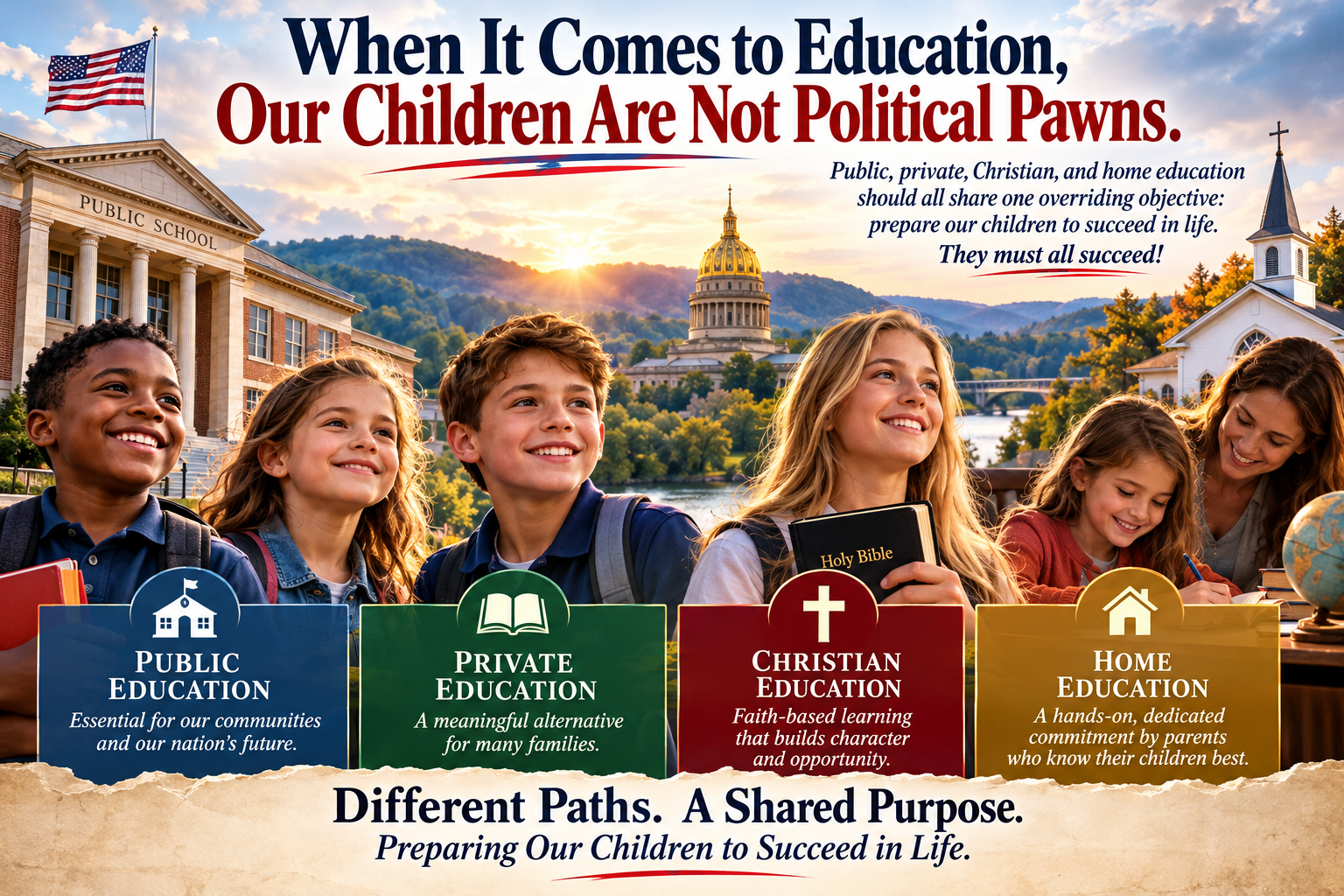
We should all find it disturbing that while the very future of our nation is at stake in educating our children, politicians, lobbyists, and special interest organizations are weaponizing education for political advantage.
Our classrooms are not ideological battlefields, and our education funding should never become a weapon used to divide our nation. Public, private, Christian, and home education should all share one overriding objective: preparing our children to succeed in life.
They must all succeed!
There should be no political winners and losers when it comes to educating our children. Public education is essential. Private and Christian schools provide meaningful alternatives. Homeschooling gives parents another opportunity to meet their children’s individual needs.
Every approach deserves respect, and every taxpayer-supported program deserves transparency, appropriate oversight, and accountability.
Public education must succeed. More than eight out of every ten schoolchildren in America are served by our public school system. Its importance to our nation’s future cannot be overstated. Public school funding and teachers’ salaries and benefits must be protected and provide incentives for performing one of the most difficult and important jobs in our nation!
Many families are extremely happy with their local public schools; others simply cannot afford another choice. But while there are public schools that are successful and highly respected in some communities, national educational results remain a concern despite the money allocated.
The U.S. is among the world’s largest spenders on public education. In fiscal year 2024, the U.S. spent more than $983 billion on public K–12 education, including pre-K, with annual operating expenditures of $17,619 per pupil. So, money alone is not the problem.
And let’s be clear. Teachers are also not the problem. As in any profession, teaching skills and abilities vary, but few enter the profession expecting financial riches. Most are motivated by a genuine love for children and a desire to help shape their futures. We should honor, respect, and support those who dedicate their lives to educating our children.
The answers must be found through a broader examination of our educational system. Curriculum, classroom size, student nutrition, parental involvement, classroom discipline, administrative costs, and the resources available to teachers all deserve thoughtful analysis. We must be willing to identify what works, acknowledge what doesn’t, and make meaningful improvements.
Parents must also have a choice in the education of their children. Absolutely no one knows a child better than a caring parent.
Private and Christian schools must also succeed in preparing our children for their futures. Adequate resources should be available to families who choose an educational setting outside the public school system. However, those resources should not come at the expense of our public schools. They should be responsibly appropriated, with transparency, meaningful oversight, and an unwavering commitment to providing every child with a quality education.
West Virginia’s Hope Scholarship has played an important role in expanding educational opportunities for families, allowing parents greater freedom to choose the educational environment they believe best meets their child’s individual needs.
And God bless the parents who choose to take such an essential, hands-on role in their children’s education through homeschooling. I can think of few greater commitments of time, resources, and personal sacrifice than that of a parent who assumes the responsibility of educating their children while managing the demands of a busy household.
These parents devote countless hours to providing instruction through thoughtfully selected curricula, often creating learning environments tailored to their children’s individual abilities, interests, and needs.
Once again, West Virginia’s Hope Scholarship has played an important role in helping eligible families access the resources necessary to make this educational choice possible.
America’s educational future should not be determined by whether a child attends a public school, private school, Christian school, or is educated at home. Each offers opportunities for academic achievement. The challenge is not to determine which institution deserves to survive, but to ensure that every child has an opportunity to succeed.
Public education must succeed. Supporting other educational options does not diminish its importance.
Parental choice also matters. Families should have meaningful options, including public, private, Christian, and homeschooling.
Teachers deserve support through competitive compensation, recruitment and retention initiatives, and responsible, sustainable funding.
We should measure educational success by what children learn, not simply by which type of school they attend. And funding for one form of education should never come at the expense of another equally valuable means of educating our children.
Every educational approach deserves the resources necessary to succeed, accompanied by transparency, meaningful oversight, and accountability for results.

