Tag Archives: Obamacare

Can we trust Barack Obama?

1 Nov

AND THEN I TOLD THEM

Let’s get folks out to vote November 4th

OBAMACARE WON’T REVEAL PRICING UNTIL AFTER THE ELECTION

14 Oct

Coincidence?????

OBAMACARE

Those planning to purchase health insurance on the Obamacare exchange will soon find out how much rates have increased — after the Nov. 4 election.

Enrollment on the Healthcare.gov website begins Nov. 15, or 11 days after the midterm vote, and critics who worry about rising premium hikes in 2015 say that’s no coincidence. Last year’s inaugural enrollment period on the health-care exchange began Oct. 1.

“This is more than just a glitch,” said Tim Phillips, president of free-market Americans for Prosperity, in a Friday statement. “The administration’s decision to withhold the costs of this law until after Election Day is just more proof that Obamacare is a bad deal for Americans.

Robert Laszewski, president of Health Policy and Strategy Associates, said in a Monday column in USA Today that “when it comes to a lack of openness and transparency about Obamacare, this administration has no peer.”

Even so, details about cost increases are trickling out in states with pivotal Senate contests: Alaska, Iowa and Louisiana. All three states are wrestling with double-digit premium hikes from some state insurance companies on the exchange, which has fueled another round of Republican attacks on the Affordable Care Act.

This undated file image shows the website for updated HealthCare,gov, a federal … more >

It’s the Democrats’ bad luck that those states may be outliers. PriceWaterhouseCoopers’ Health Research Institute reports Oct. 3 that the average premium increase this year is 5.9 percent, according to data collected from 40 states and the District of Columbia.

Who’s paying the new Obamacare tax? You

31 Aug

So who’s surprised?

When Congress passed the Affordable Care Act, it required health insurers, hospitals, device makers and pharmaceutical companies to share in the cost because they would get a windfall of new, paying customers.

But with an $8 billion tax on insurers due Sept. 30 — the first time the new tax is being collected — the industry is getting help from an unlikely source: taxpayers.

States and the federal government will spend at least $700 million this year to pay the tax for their Medicaid health plans. The three dozen states that use Medicaid managed-care plans will give those insurers more money to cover the new expense. Many of those states — such as Florida, Louisiana and Tennessee — did not expand Medicaid as the law allows, and in the process turned down billions in new federal dollars.

Other insurers are getting some help paying the tax as well. Private insurers are passing the tax onto policyholders in the form of higher premiums. Medicare health plans are getting the tax covered by the federal government via higher reimbursement.

State Medicaid agencies say they have little choice but to pay the tax for health plans they hire to insure their poorest residents. That’s because the tax is part of the health plans’ costs of doing business. Federal law requires states to pay the companies adequate rates.

“This situation results in the federal government taxing itself and taxing state governments to fund the higher Medicaid managed care payments required to fund the ACA health insurer fee,” said a report by Medicaid Health Plans of America, a trade group.

Meanwhile, many Medicaid managed-care companies have seen their share prices — and profits — soar this year as they gained thousands of new customers through the health law in states that expanded Medicaid. More than half of the 66 million people on Medicaid are enrolled in managed-care plans.

AND THEN I TOLD THEM

STEEP COSTS FOR STATES

A KHN survey of some large state Medicaid programs found the tax will be costly this year. The estimates are based in part on the number of Medicaid health plan enrollees in each state and how much they are paid in premiums. States split the cost of Medicaid with the federal government, with the federal government paying, on average, about 57%.

• Florida anticipates the tax will cost $100 million, with the state picking up $40 million and the federal government, $60 million.

• Texas estimates the tax at $220 million, with the state paying $90 million and the federal government, $130 million.

• Tennessee anticipates it will owe $160 million, with the state paying $50 million and the federal government, $110 million.

• California budgeted $88 million, with the state paying $40 million and the federal government, $48 million.

• Georgia estimates the tax on its plans at $90 million, with the state paying $29 million and the federal government, $61 million.

• Pennsylvania predicts the tax will cost $139 million, with the state paying $64 million and the federal government, $75 million.

• Louisiana estimates the tax will cost $27 million, with the state paying $10 million and the federal government, $17 million.

Texas is believed to be the only state that has not yet agreed to cover the tax for its health plans, according to state Medicaid and health plan officials. “The premium tax is just another way that the costs of the Affordable Care Act are pushed down to states and families,” said Stephanie Goodman, spokeswoman for the Texas Medicaid program.

Medicaid officials in other states complain that paying the tax reduces money they could have spent on covering more services or paying providers.

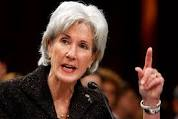
 sebelius

DIMINISHING RETURNS?

“I do not feel I am getting anything in return for this,” said Tennessee Medicaid Director Darin Gordon.

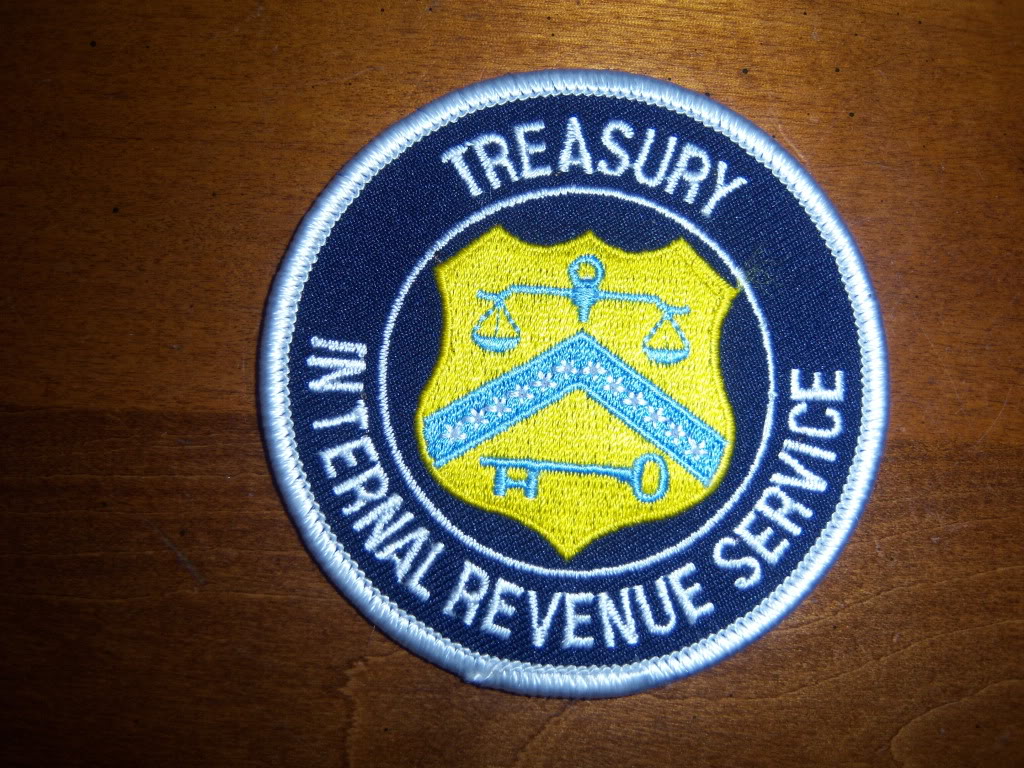
Officials won’t know exactly how much states owe until the Internal Revenue Service sends bills to insurers at the end of August and the Medicaid plans submit those to states.

The health insurer tax is estimated to bring in at least $100 billion over the next decade from all insurers, government auditors estimate.

Most non-profit Medicaid health plans are exempt from the tax, which the trade group says gives the non-profits a competitive edge vying for state contracts. “We consider this tax so badly construed that it should be reconsidered because it makes no public policy sense,” said Jeff Myers, CEO of Medicaid Health Plans of America.

The trade group, which represents both non-profit and for-profit Medicaid plans, also opposes the tax because it takes money from Medicaid programs that could be used to pay plans to improve care, he said.

The Centers for Medicare & Medicaid Services declined to comment on how states and the federal government are covering part of the tax.

Timothy Jost, a consumer advocate and law professor at Washington & Lee University in Virginia, said the lawmakers intended to cover the costs of the law by including as many groups paying in as possible.

While it may be unusual for the federal government to essentially tax itself, Jost said, the situation is no different from the federal government paying a contractor to provide a service, then having that contractor use some of those dollars to pay state sales tax or federal income tax.

“This tax should not have surprised anyone, and it should have been worked into contract prices,” he said.

Paul Van de Water, senior fellow with the left-leaning Center for Budget and Policy Priorities, said neither health plans nor states should be complaining about the taxes because both are benefiting from the law.

“States are benefiting from the Affordable Care Act because with more people getting insured, it is driving down their uncompensated care costs,” he said. He noted that is true even in states that did not expand Medicaid under the health law.

“People always like to get a benefit and not have to pay for it,” he said. “If we did not have this tax, we would have had to raise the money somewhere else.”

3 YEARS LATER

Kaiser Health News is an editorially independent program of the Kaiser Family Foundation

Fed appeals court panel says most Obamacare subsidies illegal

22 Jul

OBAMACARE

Dan Mangan
CNBC.com

In a potentially crippling blow to Obamacare, a federal appeals court panel declared Tuesday that government subsidies worth billions of dollars that helped 4.7 million people buy insurance on HealthCare.gov are illegal.

A judicial panel in a 2-1 ruling said such subsidies can be granted only to those people who bought insurance in an Obamacare exchange run by an individual state or the District of Columbia — not on the federally run exchange HealthCare.gov.

“Section 36B plainly makes subsidies available in the Exchanges established by states,” wrote Senior Circuit Judge Raymond Randolph in his majority opinion, where he was joined by Judge Thomas Griffith. “We reach this conclusion, frankly, with reluctance. At least until states that wish to can set up their own Exchanges, our ruling will likely have significant consequences both for millions of individuals receiving tax credits through federal Exchanges and for health insurance markets more broadly.”

In his dissent, Judge Harry Edwards, who called the case a “not-so-veiled attempt to gut” Obamacare, wrote that the judgment of the majority “portends disastrous consequences.”

Indeed, the decision threatens to unleash a cascade of effects that could seriously compromise Obamacare’s goals of compelling people to get health insurance, and helping them afford it.

The Obama administration is certain to ask the full U.S. Court of Appeals for the District of Columbia Circuit to reverse the panel’s decision, which for now does not have the rule of law.

The ruling endorsed a controversial interpretation of the Affordable Care Act that argues that the HealthCare.gov subsidies are illegal because ACA does not explicitly empower a federal exchange to offer subsidized coverage, as it does in the case of state-created exchanges. Subsidies for more than 2 million people who bought coverage on state exchanges would not be affected by Tuesday’s ruling if it is upheld.

HealthCare.gov serves residents of the 36 states that did not create their own health insurance marketplace. About 4.7 million people, or 86 percent of all HealthCare.gov enrollees, qualified for a subsidy to offset the cost of their coverage this year because they had low or moderate incomes.

If upheld, the ruling could lead many, if not most of those subsidized customers to abandon their health plans sold on HealthCare.gov because they no longer would find them affordable without the often-lucrative tax credits. And if that coverage then is not affordable for them as defined by the Obamacare law, those people will no longer be bound by the law’s mandate to have health insurance by this year or pay a fine next year.

If there were to be a large exodus of subsidized customers from the HealthCare.gov plans, it would in turn likely lead to much higher premium rates for nonsubsidized people who would remain in those plans.

The ruling also threatens, in the same 36 states, to gut the Obamacare rule starting next year that all employers with 50 or more full-time workers offer affordable insurance to them or face fines. That’s because the rule only kicks in if one of such an employers’ workers buy subsidized covered on HealthCare.gov.

The decision by the three-judge panel is the most serious challenge to the underpinnings of the Affordable Care Act since a challenge to that law’s constitutionality was heard by the Supreme Court. The high court in 2012 upheld most of the ACA, including the mandate that most people must get insurance or pay a fine.

If the Obama administration fails to prevail in its expected challenge to Tuesday’s bombshell ruling, it can ask the Supreme Court to reverse it.

A high court review is guaranteed if another federal appeals court circuit rules against plaintiffs in a similar case challenging the subsidies. And the only other circuit currently considering such a case, the Fourth Circuit, is expected by both sides to rule against plaintiffs there in a decision that is believed to be imminent.

Tuesday’s ruling focused on the plaintiffs’ claim that the ACA, in several of its sections, says that subsidies from the federal government in the form of tax credits can be issued through an exchange established by a state.

The law also says that if a state chooses not to set up its own exchange, the federal government can establish its own marketplace to sell insurance in such states.

However, the ACA does not explicitly say, as it does in the case of state-run exchanges, that subsidies can be given to people who buy insurance on a federal exchange.

The plaintiffs’ claim has been met with derision by Obamacare supporters, who argue that it relies on a narrow reading, or even misreading of the law. Those supporters said the claim ignores its overarching intent: to provide affordable insurance to millions of people who were previously uninsured.

Supporters argue that the legality of the subsidies to HealthCare.gov enrollee derives from the fact that the law explicitly anticipated the potential need to create an exchange in the event that a state chose not to.

When the ACA was passed, most supporters believed that the vast majority of states would create their own exchange. But the opposition to Obamacare of many Republican governors and state legislators lead to most states refusing to build their own marketplaces, setting the stage for the challenges to the subsidies issued for HealthCare.gov plans.

Two separate federal district court judges—in D.C. and Virginia—have rejected plaintiffs’ challenge to the subsidies. Those denials lead to the appeals in the D.C. federal circuit and in the Fourth Circuit.

Out of the more than 8 million Obamacare enrollees this year, fewer than 2.6 million people signed up in plans sold via an exchange run by a state or the District of Columbia. Of those people, 82 percent, or about 2.1 million, qualified for subsidies.

The subsidies are available to people whose incomes are between 100 percent and 400 percent of the federal poverty level. For a family of four, that’s between about $24,000 and $95,400 annually.

In a report issued Thursday, the consultancy Avalere Health said that if those subsidies were removed this year from the 4.7 million people who received them in HealthCare.gov states, their premiums would have been an average of 76 percent higher in price than what they are paying now.

Another report by the Robert Wood Johnson Foundation and the Urban Institute estimated that by 2016, about 7.3 million enrollees who would have qualified for financial assistance will be lose access to about $36.1 billion in subsidies if those court challenges succeed.

Justices: Can’t make employers cover contraception

30 Jun

OBAMACARE

By MARK SHERMAN
Associated Press

WASHINGTON (AP) — The Supreme Court ruled Monday that some corporations can hold religious objections that allow them to opt out of the new health law requirement that they cover contraceptives for women.

The justices’ 5-4 decision is the first time that the high court has ruled that profit-seeking businesses can hold religious views under federal law. And it means the Obama administration must search for a different way of providing free contraception to women who are covered under objecting companies’ health insurance plans.

Contraception is among a range of preventive services that must be provided at no extra charge under the health care law that President Barack Obama signed in 2010 and the Supreme Court upheld two years later.

Two years ago, Chief Justice John Roberts cast the pivotal vote that saved the health care law in the midst of Obama’s campaign for re-election. On Monday, dealing with a small sliver of the law, Roberts sided with the four justices who would have struck down the law in its entirety.

Justice Samuel Alito wrote the majority opinion. The court’s four liberal justices dissented.

The court stressed that its ruling applies only to corporations that are under the control of just a few people in which there is no essential difference between the business and its owners, like the Oklahoma-based Hobby Lobby chain of arts-and-craft stores that challenged the provision.

Alito also said the decision is limited to contraceptives under the health care law. “Our decision should not be understood to hold that an insurance-coverage mandate must necessarily fall if it conflicts with an employer’s religious beliefs,” Alito said.

He suggested two ways the administration could ensure women get the contraception they want. It could simply pay for pregnancy prevention, he said.

Or it could provide the same kind of accommodation it has made available to religious-oriented, not-for-profit corporations. Those groups can tell the government that providing the coverage violates their religious beliefs. At that point, the groups’ insurers or a third-party administrator takes on the responsibility of paying for the birth control.

The accommodation is the subject of separate legal challenges, but the court said Monday that the profit-seeking companies could not assert religious claims in such a situation.

Justice Anthony Kennedy, who was part of the majority, also wrote separately to emphasize that the administration can solve its problem easily. “The accommodation works by requiring insurance companies to cover, without cost sharing, contraception coverage for female employees who wish it,” Kennedy said. He said that arrangement “does not impinge on the plaintiffs’ religious beliefs.”

Houses of worship and other religious institutions whose primary purpose is to spread the faith are exempt from the requirement to offer birth control.

In a dissent she read aloud from the bench, Justice Ruth Bader Ginsburg called the decision “potentially sweeping” because it minimizes the government’s interest in uniform compliance with laws affecting the workplace. “And it discounts the disadvantages religion-based opt outs impose on others, in particular, employees who do not share their employer’s religious beliefs,” Ginsburg said.

The administration said a victory for the companies would prevent women who work for them from making decisions about birth control based on what’s best for their health, not whether they can afford it. The government’s supporters pointed to research showing that nearly one-third of women would change their contraceptive if cost were not an issue; a very effective means of birth control, the intrauterine device, can cost up to $1,000.

The contraceptives at issue before the court were the emergency contraceptives Plan B and ella, and two IUDs.

Nearly 50 businesses have sued over covering contraceptives. Some, like those involved in the Supreme Court case, are willing to cover most methods of contraception, as long as they can exclude drugs or devices that the government says may work after an egg has been fertilized. Other companies object to paying for any form of birth control.

There are separate lawsuits challenging the contraception provision from religiously affiliated hospitals, colleges and charities.

A survey by the Kaiser Family Foundation found 85 percent of large American employers already had offered such coverage before the health care law required it.

Most working women will probably see no impact from the ruling, corporate health benefits consultants expect. Publicly traded companies are unlikely to drag religion into their employee benefit plans, said Mark Holloway, director of compliance services at the Lockton Companies, an insurance broker that serves medium-sized and growing employers.

“Most employers view health insurance as a tool to attract and retain employees,” said Holloway. “Women employees want access to contraceptive coverage and most employers don’t have a problem providing that coverage. It is typically not a high-cost item.”

It is unclear how many women potentially are affected by the high court ruling. Hobby Lobby is by far the largest employer of any company that has gone to court to fight the birth control provision.

Oklahoma City-based Hobby Lobby has more than 15,000 full-time employees in more than 600 crafts stores in 41 states. The Greens are evangelical Christians who also own Mardel, a Christian bookstore chain.

The other company is Conestoga Wood Specialties Corp. of East Earl, Pa., owned by a Mennonite family and employing 950 people in making wood cabinets.

IRS BARS EMPLOYERS FROM DUMPING EMPLOYEES INTO HEALTH EXCHANGES

26 May

irs

WASHINGTON — NYT

The Storm is brewing. And when it hits, everyone will feel the impact, but mostly the middle class.

Many employers had thought they could shift health costs to the government by sending their employees to a health insurance exchange with a tax-free contribution of cash to help pay premiums, but the Obama administration has squelched the idea in a new ruling. Such arrangements do not satisfy the health care law, the administration said, and employers may be subject to a tax penalty of $100 a day — or $36,500 a year — for each employee who goes into the individual marketplace.

The ruling this month, by the Internal Revenue Service, blocks any wholesale move by employers to dump employees into the exchanges.

Under a central provision of the health care law, larger employers are required to offer health coverage to full-time workers, or else the employers may be subject to penalties.

David Cordani of Cigna said the insurer planned to expand beyond the five states where it offers coverage on the exchanges.

Insurers Once on the Fence Plan to Join Health Exchanges in ’15MAY 25, 2014

Many employers — some that now offer coverage and some that do not — had concluded that it would be cheaper to provide each employee with a lump sum of money to buy insurance on an exchange, instead of providing coverage directly.

But the Obama administration raised objections, contained in an authoritative question-and-answer document released by the Internal Revenue Service, in consultation with other agencies.

The health law, known as the Affordable Care Act, builds on the current system of employer-based health insurance. The administration, like many in Congress, wants employers to continue to provide coverage to workers and their families.

“I don’t think that an employer-based system is going to be, or should be, replaced anytime soon,” President Obama said recently, when asked if the law might speed the erosion of employer-sponsored insurance.

When employers provide coverage, their contributions, averaging more than $5,000 a year per employee, are not counted as taxable income to workers. But the Internal Revenue Service said employers could not meet their obligations under the health care law by simply reimbursing employees for some or all of their premium costs.

Christopher E. Condeluci, a former tax and benefits counsel to the Senate Finance Committee, said the ruling was significant because it made clear that “an employee cannot use tax-free contributions from an employer to purchase an insurance policy sold in the individual health insurance market, inside or outside an exchange.”

If an employer wants to help employees buy insurance on their own, Mr. Condeluci said, it can give them higher pay, in the form of taxable wages. But in such cases, he said, the employer and the employee would owe payroll taxes on those wages, and the change could be viewed by workers as reducing a valuable benefit.

Andrew R. Biebl, a tax partner at CliftonLarsonAllen, a large accounting firm based in Minneapolis, said the ruling could disrupt arrangements used in many industries.

“For decades,” Mr. Biebl said, “employers have been assisting employees by reimbursing them for health insurance premiums and out-of-pocket costs. The new federal ruling eliminates many of those arrangements by imposing an unusually punitive penalty.”

When an employer reimburses employees for premiums, the arrangement is known as an employer payment plan. “These employer payment plans are considered to be group health plans,” the I.R.S. said, but they do not satisfy requirements of the Affordable Care Act.

Under the law, insurers may not impose annual limits on the dollar amount of benefits for any individual, and they must provide certain preventive services, like mammograms and colon cancer screenings, without co-payments or other charges.

But the administration said employer payment plans do not meet those requirements.

Richard K. Lindquist, the president of Zane Benefits in Park City, Utah, a software company that helps employers reimburse workers for health insurance costs, said, “The I.R.S. is going out of its way to keep employers in the group insurance market and to reduce the incentives for them to drop coverage.”

The ruling came as the Obama administration rushed to provide guidance to employers and insurers deciding what types of coverage to offer in 2015.

In a new regulation, the Department of Health and Human Services said it would provide financial assistance to certain insurers that experience unexpected financial losses this year. Administration officials hope the payments will stabilize premiums and prevent rate increases that could embarrass Democrats in this year’s midterm elections.

Republicans want to block the payments, which they see as a bailout for insurance companies that supported the president’s health care law.

In a separate rule, the administration prohibits states from imposing onerous restrictions on insurance counselors, who educate consumers and help them enroll in health plans. Under the rule, states cannot establish standards that impair the counselors’ ability to help consumers or to perform other tasks required by federal law.

In January, a federal district judge in Missouri found that the state was illegally obstructing the activities of insurance counselors, including those known as navigators. The state has appealed the decision.

A version of this article appears in print on May 26, 2014, on page A12 of the New York edition with the headline:

Obama acts is if he’s above the law; he’s not

29 Apr

one bill at at time

Feb. 27, 2014 @ 12:00 AM

What liberals refer to as “obstructionist” tactics by Republicans in blocking the socialist policies of Barack Hussein Obama, conservatives call “preserving the Constitution.”

It’s interesting that while the president has often referred to himself as a “constitutional law professor,” the title is somewhat gratuitous. While never a full-time or tenured professor, he did teach courses in constitutional law at the University of Chicago as a “senior lecturer.”

Unfortunately, rather than use his knowledge to adhere to its provisions, the president has chosen to test the boundaries of our government’s founding document.

Article II, Section 3 of the U. S. Constitution, sometimes known as the “Faithful Execution Clause,” is best read as a duty that qualifies the president’s executive power. By virtue of this power, the president is required to “take care” that our nation’s laws are “faithfully executed.”

But not only has Obama been derelict in his duty to protect our laws, he’s an offender.

As Democrats are so fond of reminding Republicans, Obamacare is now the law of the land.

But despite the fact The Patient Protection and Affordable Care Act was indeed signed into law in 2010 and ultimately upheld by the Supreme Court, President Obama believes it’s within his power to make changes without Congressional action!

Our Constitution clearly grants legislative powers to Congress. The president does not have the authority to arbitrarily “alter” legislation signed into law.

The employer mandate, which requires businesses employing 50 or more full-time employees to provide health insurance or pay a fine, was scheduled to take effect in 2014, but has been delayed entirely or in part, twice, by the president!

The fact that Obamacare is poor legislation doesn’t grant the president powers exceeding those afforded him by the Constitution.

And in the first case of its kind, the Supreme Court is now arguing the legality of four “recess” appointments made by President Obama to the National Labor Relations Board (NLRB) and the Consumer Financial Protection Bureau in 2012. The Constitution allows the president to make temporary appointments to those positions that otherwise require Senate confirmation, but only when the Senate is in recess. The problem is — the Senate was not in recess!

Three federal appeals courts have already ruled that Obama overstepped his authority in these appointments.

It’s obvious the president is following the “executive version” of the liberal playbook which calls for continuous contestation of preconceived limitations designed to “progressively” tilt the scales of totalitarian power to the left.

President Obama is arguably the most liberal president in our nation’s history. If he’s successful in these attempts to bypass our nation’s laws, what leftist policies will he pursue in his remaining years in office?

The U.S. Constitution is not merely a guideline to be consulted by those it was written to regulate. It’s the supreme law of the land written to protect the rights of all Americans and must be protected.

It’s time Americans “tether” President Obama to the Constitution and hold him accountable for adhering to its precepts.

This president is not above the law.

Mark Caserta is a Cabell County resident and a regular contributor to The Herald-Dispatch editorial page.

Mark Caserta: Liberals’ only interest is fundamental change

17 Apr

holder

hillary

lerner

sebelius

Apr. 17, 2014 @ 12:00 AM

Few government entities have the capacity to impact Americans more than the Justice Department, the State Department, the Health and Human Services Department and the Internal Revenue Service. All are led by individuals appointed by the president with the advice and consent of the U.S. Senate.

With a combined annual budget approaching $1 trillion of taxpayer money, these agencies shoulder significant responsibility in managing the infrastructure of government and taking care of the people’s business.

Yet despite the substandard performance of each of these government agencies during the Obama administration, liberals seem more focused on advancing their progressive movement than strengthening our nation and seeking justice.

In 2012, Attorney General Eric Holder was held in contempt by the House of Representatives for refusing to turn over documents tied to the botched “Fast and Furious” gun-running operation. Two guns found at the scene of Border Patrol Agent Brian Terry’s fatal shooting were determined to be linked to the Justice Department operation. While the investigation is ongoing, Holder insists the tragedy is simply being leveraged for political advantage.

On the night of September 11, 2012, a heavily armed group of terrorists attacked the American diplomatic mission in Benghazi, Libya, killing four brave Americans, including U.S. Ambassador Christopher Stevens. In the days following the attack, the State Department would engage in what appeared to be a cover-up of what actually happened during the attack with a fabricated story claiming the uprising was in opposition to an anti-Muslim film that had triggered protests in Egypt and elsewhere.

Recently, shouldering the weight of a miserable Healthcare.gov rollout and feeling the pressure of an upcoming election, Kathleen Sebelius resigned her post as secretary of Health and Human Services. But timing is everything in politics, so it was important for the Obama administration to “accept” her resignation in the wake of the announcement that 7.5 million people already had signed up for Obamacare. Interestingly, the White House will not provide answers to key questions, such as how many enrollees were previously insured and how many have actually paid their first month’s premium.

But this administration has proven it won’t allow facts to get in the way of advancing its agenda. It’s mind-numbing for liberals to be so infatuated with this president it means absolutely nothing to them that he repeatedly and unrepentantly lied to Americans about the Affordable Care Act!

And just last week, The House Oversight and Government Reform Committee approved a resolution to hold ex-IRS official Lois Lerner in contempt of Congress for refusing to testify at two of the panel’s hearings. Lerner, who headed an IRS division that reviews applications for tax exemption, invoked her Fifth Amendment right at both hearings when asked about targeting of Tea Party affiliated organizations.

Now, we’ve always had government corruption, but the scope and practice here is unprecedented. Despite the Obama administration’s autocratic, unfettered approach, liberals don’t seem to care.

They simply want fundamental change.

Mark Caserta is a conservative blogger, a Cabell County resident and a regular contributor to The Herald-Dispatch editorial page

Mark Caserta: Individual mandate change cripples Obamacare

3 Apr

obamavcareApr. 03, 2014 @ 12:00 AM

Obamacare is falling apart. And honestly, it’s been altered or delayed so many times Americans are no longer able to take this legislation seriously.

Piece by piece, we’ve watched the Affordable Care Act (ACA) crumble. And last week the Obama administration witnessed the very core of the president’s signature healthcare law severely crippled — the individual mandate.

On Tuesday, the Health and Human Services Department announced the six-month open enrollment period for Obamacare that began in October 2013 and was supposed to end March 31 would be extended for two years for those with canceled policies who qualify under a broadened “hardship” requirement.

Previously, the HHS had provided exemptions only in substantial hardship cases. But facing potential backlash from millions of voters who will be liable for a “shared responsibility” payment or fine for every month they don’t have coverage or an exemption, the agency chose to “broaden” the scope of those qualifying for exemptions. Now, anyone who claims that going into an exchange would constitute a “hardship” would qualify. They would simply “check a box” signifying they’ve “experienced a hardship” that prevents them from getting health coverage.

This “relaxed” accommodation mortally compromises the individual mandate which the Obama administration told the Supreme Court was “essential” to the administration of the ACA.

The president’s role in the demise of Obamacare is really quite ironic.

When Republicans attempted to delay components of the Affordable Care Act, the president and complicit liberals berated them, saying, “You can’t shut down Obamacare. It’s the law.” But in glaring hypocrisy, the president repeatedly broke his own law and delayed it as needed to keep it alive.

On July 2, 2013, the administration delayed for one year the mandate forcing businesses to provide health coverage or pay fines, and delayed it again for another year in February 2014.

On Nov. 14, 2013, the president gave a last-minute extension for insurance plans that would have been canceled at the end of 2013 because they failed to meet Obamacare’s minimum requirements.

On March 5 of this year, Obama gave Americans the option to renew their health care plans that were canceled because of the law until 2016 and keep them until 2017.

And finally, the Obama administration’s most recent extension of the deadline for enrolling in Obamacare, essentially crippling the president’s “buy it or else” mandate.

While Obama was successful in legislating his ideology upon our nation, it’s important to remember that many Americans were simply misled about the Affordable Care Act.

But as the truth is revealed, more Americans are becoming disenchanted with this president and his healthcare legislation. A recent ABC News poll showed that nearly two-thirds of Americans now support getting rid of the individual mandate.

Leading up to the November elections, I expect Obamacare to become more of a “suggestion” than a mandate. And unless the GOP wins the Senate in November, look for Democrats to begin pitching a single-payer, government run healthcare system as the only viable solution.

But without the individual mandate, Obamacare will be history.

Mark Caserta is a conservative blogger, a Cabell County resident and a regular contributor to The Herald-Dispatch editorial page.

Mark Caserta: Obamacare works, but not for America

9 Mar

imagesMar. 06, 2014 @ 12:00 AM

Liberals keep telling Americans that Obamacare is working, and they may be right.

In fact, last week Senate Majority Leader Harry Reid told Americans that all of the Obamacare “horror stories” simply aren’t true.

“There’s plenty of horror stories being told,” Reid said from the Senate floor about Republicans. “All of them are untrue, but they’re being told all over America.”

I’m not sure Betsy Tadder from Illinois would agree.

In an interview with Fox News last fall, Ms. Tadder shared the uncertainty she now faces after her health insurance carrier canceled her policy.

Betsy Tadder previously paid $454 a month for a plan she liked, but it was set to end in December. After searching her options, the cheapest replacement plan she could find will cost her $871, nearly twice the cost of her canceled plan and with a much higher deductible.

“I could stretch my budget to afford a policy, but the deductible is $12,700. I don’t have $12,700 to pay for a deductible on Obamacare,” Tadder said. She went on to explain that her income was too high for subsidies, but too low for a better policy.

It’s interesting Senator Reid would accuse Republicans of lying about Obamacare when the president’s entire signature healthcare reform bill was sold on a series of lies.

The president misled Americans by promising they could choose to keep their healthcare plan or doctor if they wanted. He also led Americans to believe the typical family would receive a $2,500 annual reduction in their annual premium. Both were dubbed lies by Politifact.com.

And Americans were lied to about Obamacare providing affordable health insurance for every American. Based on the Congressional Budget Office’s February 2014 Baseline analysis, 31 million non-elderly Americans will be left uninsured by the year 2016.

So in the midst of the deception and with millions of Americans having already lost their health insurance, why would liberals keep insisting Obamacare is working?

I submit that Obamacare isn’t about providing affordable healthcare to more Americans at all.

It’s about fundamentally changing America with increased government control in our lives.

Understand the entire success of Obama’s plan depends on the Marxist principles of redistribution. People who once had affordable healthcare are being forced into a “community” of buyers where those “who have” support those “who do not.”

Socialism openly declares that “their ends can be attained only by the forcible overthrow of all existing social conditions.” And life’s possessions are taken “from each according to his abilities” and redistributed to “each according to his needs.”

And liberals qualify the millions of canceled policies by telling American’s they simply weren’t smart enough to figure out their policies weren’t any good. But no worries, we now have a leader who knows what’s best for everyone.

Is this really the America we want to leave for our children? Do we really want the government making these decisions for us?

Obama’s ideology better aligns with The Communist Manifesto than with the U.S. Constitution.

Yes, Obamacare is working all right. It’s working against America.