Tag Archives: Barack Hussein Obama

Mark Caserta: Was Obamacare an intentional deception?

20 Nov

It seems that everything about this administration is built around a planned deception of the American people.

 gruber 1

What can we now believe?

Nov. 20, 2014 @ 12:24 AM

Evidence is rapidly developing that suggests the lies about Obamacare which helped pass the law and get President Obama elected were premeditated.

Economist Jonathan Gruber, one of the Obama administration’s consultants on the Affordable Care Act (ACA), is under attack for comments he made last year in which he said the “stupidity of the American voter” was a key factor in passing Obamacare in 2010.

Gruber’s impartation regarding the president’s signature health care law emerged in a video taken at the Annual Health Economics Conference last year.

“This bill was written in a tortured way to make sure CBO did not score the mandate as taxes,” he said during a panel discussion at the University of Pennsylvania in October 2013. “Lack of transparency is a huge political advantage. And basically, call it the ‘stupidity of the American voter’ or whatever, but basically that was really, really critical to getting the thing to pass.”

gruber 2

Gruber said he regretted making the comments last Tuesday during an on-air interview with MSNBC’s Ronan Farrow. But even as Gruber apologized, subsequent videos began to surface adding veracity to Gruber’s remarks acknowledging the administration’s “lack of transparency” in the legislative process.

“You can’t do it politically. You just literally cannot do it, okay, transparent financing and also transparent spending.” Gruber said. “In terms of risk-rated subsidies, if you had a law which said that healthy people are going to pay in you made explicit that healthy people pay in and sick people get money, it would not have passed, okay.”

In a very telling fourth video Gruber not only insults the American people but portrays President Obama as being complicit in misleading Americans.

obama climate 2

“Barack Obama’s not a stupid man, okay?” Gruber said in a college talk at Holy Cross in March 2010. “He knew when he was running for president that quite frankly the American public doesn’t actually care that much about the uninsured. What the American public cares about is costs.”

And indeed, the president kept Americans focused on the “affordability” of his health care debacle.

As a candidate in 2008, Barack Obama repeatedly said his healthcare plan would reduce the typical family’s annual premiums by up to $2,500 per year. Often, he didn’t include the disclaimer “up to,” simply saying the “typical” family would save about $2,500 a year on premiums. Yet, this promise, as so many others, did not come to fruition for Americans.

And last Friday, just hours before the health insurance marketplace was to open to buyers seeking insurance for 2015, the Obama administration unveiled data showing that many Americans with health insurance plans purchased under the ACA could face up to 20 percent increases in their premiums unless they switch plans!

I believe these were calculated deceptions which changed the course of American history. Obamacare and very likely the election of Barack Obama would never have happened if the American people had known the truth.

gruber 3

As a result, Democrat leadership and this president have stained American history, forged a legacy of deceit, and lost all credibility with the American people.

Mark Caserta is a conservative blogger, a Cabell County resident and a regular contributor to The Herald-Dispatch editorial page.
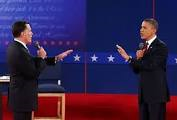
Mitt Romney makes Obama look foolish in this debate clip. It only takes 45 seconds…

31 Oct

romney obama

http://conservativetribune.com/romney-makes-obama-foolish/

These days, Democrats aren’t talking much about Obama in congressional speeches.

20 Sep

Washington Post

dems turn

File: Rep. Rosa DeLauro (D-Conn.) (center) and other Democrats including Rep. George Miller D-CA (at right with hands to his mouth) react as President Obama delivers his State of the Union address to a Joint Session of Congress on Capitol Hill on Jan. 27, 2010 in Washington, DC. (Photo by Melina Mara/The Washington Post)

When President Obama took office in 2009, congressional Democrats were euphoric. With control of the House, Senate and the White House, and high public approval for their new party standard bearer, Democrats eagerly embraced Obama and all the long-awaited policy initiatives he’d surely help them achieve.

In that first month, congressional Democrats mentioned Obama during floor speeches 200 or so more times than Republicans. In the next year and a half, the parties referred to the president at similar rates, sometimes with the Republicans having more to say, other times the Democrats.

One can reasonably assume that when the Democrats speak of the president publicly it’s in a favorable way and when Republicans do it’s, well, not quite as glowing. As positive public opinion of Obama began to dip after his first year, the spread between how often Republicans and the Democrats invoked Obama grew wider. Put simply, the Democrats weren’t mentioning Obama by name nearly as much as Republicans.

dems turn 2

The gap is particularly notable in the last year as seen in the chart above by the Sunlight Foundation, which measures how often any given word is spoken against all words in floor speeches and debates collected by the Congressional Record. Last fall, at the height of the government shutdown and the Obamacare rollout, Republicans were predictably discussing (bashing) Obama more.

But the trend has continued.

Much has been written this election cycle about the Democrats distancing themselves from Obama ahead of the midterm elections. Some Democratic candidates in tough races regularly emphasize their differences with the president. And Obama is persona non grata on the campaign trail (unless it’s inside private high-dollar fundraiser dinners).

If the number of times they bring him up in front of the C-SPAN cameras is a measure, the Democrats detachment from the president is even evident on Capitol Hill – where every spoken word is recorded forever, so it’s especially crucial to choose them carefully.

As my grandmother always said, “You can’t take back the spoken word.”

She also often said, “If you can’t say anything, nice don’t say anything at all.” And perhaps Democrats simply don’t have very many nice things to say.

dems turn 3

Exclusive: Angry with Washington, 1 in 4 Americans open to secession

19 Sep

By Scott Malone

A girl holds a U.S. flag next to a sculpture after a naturalization ceremony in New York July 22, 2014. REUTERS/Shannon Stapleton

A girl holds a U.S. flag next to a sculpture after a naturalization ceremony in New York July 22, 2014.

Credit: Reuters/Shannon Stapleton

 BOSTON (Reuters) – The failed Scottish vote to pull out from the United Kingdom stirred secessionist hopes for some in the United States, where almost a quarter of people are open to their states leaving the union, a new Reuters/Ipsos poll found.

Some 23.9 percent of Americans polled from Aug. 23 through Sept. 16 said they strongly supported or tended to support the idea of their state breaking away, while 53.3 percent of the 8,952 respondents strongly opposed or tended to oppose the notion.

The urge to sever ties with Washington cuts across party lines and regions, though Republicans and residents of rural Western states are generally warmer to the idea than Democrats and Northeasterners, according to the poll.

Anger with President Barack Obama’s handling of issues ranging from healthcare reform to the rise of Islamic State militants drives some of the feeling, with Republican respondents citing dissatisfaction with his administration as coloring their thinking.

But others said long-running Washington gridlock had prompted them to wonder if their states would be better off striking out on their own, a move no U.S. state has tried in the 150 years since the bloody Civil War that led to the end of slavery in the South.

“I don’t think it makes a whole lot of difference anymore which political party is running things. Nothing gets done,” said Roy Gustafson, 61, of Camden, South Carolina, who lives on disability payments. “The state would be better off handling things on its own.”

Scottish unionists won by a wider-than-expected 10-percentage-point margin.

Falling public approval of the Obama administration, attention to the Scottish vote and the success of activists who accuse the U.S. government of overstepping its authority – such as the self-proclaimed militia members who flocked to Nevada’s Bundy ranch earlier this year during a standoff over grazing rights – is driving up interest in secession, experts said.

“It seems to have heated up, especially since the election of President Obama,” said Mordecai Lee, a professor of governmental affairs at the University of Wisconsin at Milwaukee, who has studied secessionist movements.

‘OBAMACARE’ A FACTOR

Republicans were more inclined to support the idea, with 29.7 percent favoring it compared with 21 percent of Democrats.

Brittany Royal, a 31-year-old nurse from Wilkesboro, North Carolina, said anger over the “Obamacare” healthcare reform law made her wonder if her state would be better off on its own.

“That has really hurt a lot of people here, myself included. My insurance went from $40 a week for a family of four up to over $600 a month for a family of four,” said Royal, a Republican. “The North Carolina government itself is sustainable. Governor (Pat) McCrory, I think he has a better healthcare plan than President Obama.”

By region, the idea was least popular in New England, the cradle of the Revolutionary War, with just 17.4 percent of respondents open to pulling their state out.

It was most popular in the Southwest, where 34.1 percent of respondents back the idea.

That region includes Texas, where an activist group is calling the state’s legislature to put the secession question on a statewide ballot. One Texan respondent said he was confident his state could get by without the rest of the country.

“Texas has everything we need. We have the manufacturing, we have the oil, and we don’t need them,” said Mark Denny, a 59-year-old retiree living outside Dallas on disability payments.

Denny, a Republican, had cheered on the Scottish independence movement.

“I have totally, completely lost faith in the federal government, the people running it, whether Republican, Democrat, independent, whatever,” he said.

Even in Texas, some respondents said talk about breaking away was more of a sign of their anger with Washington than evidence of a real desire to go it alone. Democrat Lila Guzman, of Round Rock, said the threat could persuade Washington lawmakers and the White House to listen more closely to average people’s concerns.

“When I say secede, I’m not like (former National Rifle Association president) Charlton Heston with my gun up in the air, ‘my cold dead hands.’ It’s more like – we could do it if we had to,” said Guzman, 62. “But the first option is, golly, get it back on the right track. Not all is lost. But there might come a point that we say, ‘Hey, y’all, we’re dusting our hands and we’re moving on.'”

Mark Caserta: Obama owns the war on ISIS

18 Sep

`obama isis 1

Sep. 18, 2014 @ 12:00 AM

The year was 2007. Americans were weary of the war in Iraq and pressures were mounting to bring our troops home.

The U.S. had stated the intent was to remove “a regime that developed and used weapons of mass destruction, harbored and supported terrorists, committed outrageous human rights abuses, and defied the just demands of the United Nations and the world.” The primary rationalization for the Iraq War was articulated in a joint resolution of Congress, known as the “Iraq Resolution” and had the support of Democrats like Joe Biden, Hillary Clinton, John Kerry and Harry Reid.

But the Bush administration struggled to produce the suspected weapons of mass destruction and the mission became increasingly clouded by the speculation of poor intelligence. Many began to challenge our motivation for remaining in the region. Although the United States had successfully toppled the ruthless regime of Saddam Hussein, the value of the service, once performed, began to decrease. A pivotal point had been reached in the war.

In a January speech to the nation, President Bush took to the podium to announce a major tactical shift where he planned to send an additional 20,000 troops to Iraq to provide additional security to Baghdad and Al Anbar Province. “The surge,” as it’s become known, operated under the working title “The New Way Forward.”

obama isis 2

But the idea of sending additional troops wasn’t popular with Americans or the president’s naysayers who opportunistically leveraged the decision politically. The president’s approval ratings plummeted over the next few months as slow progress made it appear their assertions about the surge may have been correct.

On July 12, Bush addressed the nation to answer his critics, warning of the consequences of failure in Iraq.

“It would mean surrendering the future of Iraq to al Qaeda,” Bush said at the time. “It would mean that we’d be risking mass killings on a horrific scale. It would mean we allow the terrorists to establish a safe haven in Iraq to replace the one they lost in Afghanistan.”

He added that abandoning Iraq “would mean increasing the probability that American troops would have to return at some later date to confront an enemy that is even more dangerous.”

By the end of 2007, the surge was having an impact and Iraq began to stabilize. But the damage had been done politically. Americans were ready for a change.

In the 2008 presidential election Americans voted for Barack Obama, largely on his commitment to end the Iraq War. And as promised, in 2009 he began an 18-month drawdown of our troops, ignoring his military commander’s recommendation to leave 20,000 troops behind.

Today, just as Bush predicted, the void from Obama’s ill-timed exit from Iraq has been filled by the Islamic State forces, the horrific organization the world has come to know as ISIS or ISIL.

America now faces a new enemy. Does President Obama have the fortitude to do what’s necessary to “degrade and destroy” ISIS?

Only time will tell. But based on accurate history, Barack Obama owns this war on The Islamic State.

obama isis 3

Mark Caserta is a conservative blogger, a Cabell County resident and a regular contributor to The Herald-Dispatch editorial page.

OBAMA’S SHIP IS SINKING

14 Sep

Michael Goodwin – NY Post

obamaspast00

The rising clamor over the beheading of two Americans, and rapidly sinking polls, forced President Obama to reassure the nation last week he had a plan to deal with the Islamic State. He did some of what he had to do, but only some, and so most military analysts believe the expanded airstrikes will not be a sufficient match for the size and weaponry of the terrorist army.

They miss the point. The disjointed speech wasn’t really about terrorism and launching a new war. It was about saving Obama’s presidency.

He is sinking fast and could soon pass the point of no return. In fact, it may already be too late to save the SS Obama.

The whole second term has been a string of disasters, with the toxic brew of his Obamacare lies, middling economic growth and violent global breakdown casting doubt on the president’s stewardship. Six years into his tenure, nothing is going as promised.

Earlier on, he could have trotted out his teleprompters and turned public opinion his way, or at least stopped the damage. But the magic of his rhetoric is long gone, and not just because the public has tuned him out.

They’ve tuned him out because they’ve made up their minds about him. They no longer trust him and don’t think he’s a good leader.

Most ominously, they feel less safe now than they did when he took office. Americans know the war on terror isn’t over, no matter what their president claims.

Those findings turned up in a tsunami of recent polls that amount to a public vote of no confidence. They shook up the White House so much that the plan to grant amnesty to millions of illegal immigrants was put on hold to try to protect Democratic candidates from voter wrath in November.

That was a necessary tactical retreat, but it doesn’t change the ­basic calculation. The president’s problem is that he has been wrong about virtually every major issue.

His worldview, his politics, his prejudices, his habits — they’ve been a mismatch for the country and its needs. He has been a dud even in the one area where he seemed a lock to make things better, racial relations. Only 10 percent believe race relations have improved under him, while 35 percent said they are worse, according to a New York Times survey. The remainder said there wasn’t much change either way.

That’s shocking — but not surprising. Barack Obama was not ready to be president, and still isn’t. It is a fantasy to believe he’ll master the art in his final two years.

The lasting image will be his yukking it up on the golf course minutes after giving a perfunctory speech on the beheading of James Foley. It revealed him as hollow, both to America and the world, and there is no way to un-see the emptiness.

That means, I fear, we are on the cusp of tragedy. It is reasonable to assume the worst-case scenarios about national security are growing increasingly likely to occur.

Obama’s fecklessness is so unique that our adversaries and enemies surely realize they will never face a weaker president. They must assume the next commander in chief will take a more muscular approach to America’s interests and be more determined to forge alliances than the estranged man who occupies the Oval Office now.

So Vladimir Putin, Iran, China, Islamic State, al Qaeda and any other number of despots and terrorists know they have two years to make their moves and advance their interests, and that resistance will be token, if there is any at all.

Throw in the fact that Europe largely has scrapped its military might to pay for its welfare states, and the entire West is a diminished, confused opponent, ripe for the taking. Redrawn maps and expanded spheres of influence could last for generations.

Of course, there is a possibility that America could rally around the president in a crisis, and there would be many voices demanding just that. But a national consensus requires a president who is able to tap into a reservoir of good will and have his leadership trusted.

That’s not the president we have.

crisis mode

PRAYER FOR OBAMA: ONE WHICH WE SHOULD BEGIN PRAYING IMMEDIATELY

13 Sep

This will make you smile 🙂

Psalm 109:8
My wife and I were in slow-moving traffic the other day and
We were stopped behind a car with an unusual Obama
Bumper sticker on its bumper.
It read: "Pray for Obama Psalm 109:8"

When we got home my wife got out the Bible and opened it
up to the scripture. She started laughing and laughing. Then she
read it to me. I couldn't believe what it said. I had a good
laugh, too.

Psalm 109:8 ~
"Let his days be few and brief;
And let others step forward to replace him."

At last -- I can honestly voice a biblical prayer for our
President!

Let us all bow our heads and pray.

Brothers and Sisters... can I get a big

AMEN!

Psalm 109:8
My wife and I were in slow-moving traffic the other day and
We were stopped behind a car with an unusual Obama
Bumper sticker on its bumper.
It read: “Pray for Obama Psalm 109:8”

When we got home my wife got out the Bible and opened it
up to the scripture. She started laughing and laughing. Then she
read it to me. I couldn’t believe what it said. I had a good
laugh, too.

Psalm 109:8 ~
“Let his days be few and brief;
And let others step forward to replace him.”

At last — I can honestly voice a biblical prayer for our
President!

Let us all bow our heads and pray.

Brothers and Sisters… can I get a big

AMEN!

Obama’s ‘Strategy’ Has No Chance of Success

12 Sep

Just going through the motions…

• By FREDERICK W. KAGAN and KIMBERLY KAGAN

crisis mode

President Obama just announced that he is bringing a counter-terrorism strategy to an insurgency fight. He was at pains to repeat the phrase “counter-terror” four times in a short speech. Noting that ISIL is not a state (partly because the international community thankfully does not recognize it), he declared, “ISIL is a terrorist organization, pure and simple. And it has no vision other than the slaughter of all who stand in its way.”  Neither of those sentences, unfortunately, is true.

ISIL is an insurgent group that controls enormous territory in Iraq and Syria that it governs. It maneuvers conventional light infantry forces supported by vehicles mounting machine guns and occasionally armored personnel carriers against the regular forces of the Iraqi Army and the Kurdish Peshmerga—and wins.

It is purely and simply not a terrorist organization any longer. Neither is it the simple manifestation of nihilistic evil the president makes out.

ISIL has described a very clear vision of seizing control of all of the territory of Iraq, Syria, Lebanon, Jordan, Israel, and the Palestinian Territories.  It intends to abolish all of the borders and redraw them according to a new structure of governance suitable to its hateful version of an old Islamic heresy.  That vision also makes it more than a simple terrorist organization.  It’s awfully hard to develop a sound strategy when you start by mis-diagnosing the problem so profoundly. That’s why the “strategy” the president just announced has no chance of success

Who’s paying the new Obamacare tax? You

31 Aug

So who’s surprised?

When Congress passed the Affordable Care Act, it required health insurers, hospitals, device makers and pharmaceutical companies to share in the cost because they would get a windfall of new, paying customers.

But with an $8 billion tax on insurers due Sept. 30 — the first time the new tax is being collected — the industry is getting help from an unlikely source: taxpayers.

States and the federal government will spend at least $700 million this year to pay the tax for their Medicaid health plans. The three dozen states that use Medicaid managed-care plans will give those insurers more money to cover the new expense. Many of those states — such as Florida, Louisiana and Tennessee — did not expand Medicaid as the law allows, and in the process turned down billions in new federal dollars.

Other insurers are getting some help paying the tax as well. Private insurers are passing the tax onto policyholders in the form of higher premiums. Medicare health plans are getting the tax covered by the federal government via higher reimbursement.

State Medicaid agencies say they have little choice but to pay the tax for health plans they hire to insure their poorest residents. That’s because the tax is part of the health plans’ costs of doing business. Federal law requires states to pay the companies adequate rates.

“This situation results in the federal government taxing itself and taxing state governments to fund the higher Medicaid managed care payments required to fund the ACA health insurer fee,” said a report by Medicaid Health Plans of America, a trade group.

Meanwhile, many Medicaid managed-care companies have seen their share prices — and profits — soar this year as they gained thousands of new customers through the health law in states that expanded Medicaid. More than half of the 66 million people on Medicaid are enrolled in managed-care plans.

AND THEN I TOLD THEM

STEEP COSTS FOR STATES

A KHN survey of some large state Medicaid programs found the tax will be costly this year. The estimates are based in part on the number of Medicaid health plan enrollees in each state and how much they are paid in premiums. States split the cost of Medicaid with the federal government, with the federal government paying, on average, about 57%.

• Florida anticipates the tax will cost $100 million, with the state picking up $40 million and the federal government, $60 million.

• Texas estimates the tax at $220 million, with the state paying $90 million and the federal government, $130 million.

• Tennessee anticipates it will owe $160 million, with the state paying $50 million and the federal government, $110 million.

• California budgeted $88 million, with the state paying $40 million and the federal government, $48 million.

• Georgia estimates the tax on its plans at $90 million, with the state paying $29 million and the federal government, $61 million.

• Pennsylvania predicts the tax will cost $139 million, with the state paying $64 million and the federal government, $75 million.

• Louisiana estimates the tax will cost $27 million, with the state paying $10 million and the federal government, $17 million.

Texas is believed to be the only state that has not yet agreed to cover the tax for its health plans, according to state Medicaid and health plan officials. “The premium tax is just another way that the costs of the Affordable Care Act are pushed down to states and families,” said Stephanie Goodman, spokeswoman for the Texas Medicaid program.

Medicaid officials in other states complain that paying the tax reduces money they could have spent on covering more services or paying providers.

 sebelius

DIMINISHING RETURNS?

“I do not feel I am getting anything in return for this,” said Tennessee Medicaid Director Darin Gordon.

Officials won’t know exactly how much states owe until the Internal Revenue Service sends bills to insurers at the end of August and the Medicaid plans submit those to states.

The health insurer tax is estimated to bring in at least $100 billion over the next decade from all insurers, government auditors estimate.

Most non-profit Medicaid health plans are exempt from the tax, which the trade group says gives the non-profits a competitive edge vying for state contracts. “We consider this tax so badly construed that it should be reconsidered because it makes no public policy sense,” said Jeff Myers, CEO of Medicaid Health Plans of America.

The trade group, which represents both non-profit and for-profit Medicaid plans, also opposes the tax because it takes money from Medicaid programs that could be used to pay plans to improve care, he said.

The Centers for Medicare & Medicaid Services declined to comment on how states and the federal government are covering part of the tax.

Timothy Jost, a consumer advocate and law professor at Washington & Lee University in Virginia, said the lawmakers intended to cover the costs of the law by including as many groups paying in as possible.

While it may be unusual for the federal government to essentially tax itself, Jost said, the situation is no different from the federal government paying a contractor to provide a service, then having that contractor use some of those dollars to pay state sales tax or federal income tax.

“This tax should not have surprised anyone, and it should have been worked into contract prices,” he said.

Paul Van de Water, senior fellow with the left-leaning Center for Budget and Policy Priorities, said neither health plans nor states should be complaining about the taxes because both are benefiting from the law.

“States are benefiting from the Affordable Care Act because with more people getting insured, it is driving down their uncompensated care costs,” he said. He noted that is true even in states that did not expand Medicaid under the health law.

“People always like to get a benefit and not have to pay for it,” he said. “If we did not have this tax, we would have had to raise the money somewhere else.”

3 YEARS LATER

Kaiser Health News is an editorially independent program of the Kaiser Family Foundation

OBAMA ON ISIS: “WE DON’T HAVE A STRATEGY”

29 Aug

isis

Washington Post

By Editorial Board August 29 at 6:59 PM

PRESIDENT OBAMA’S acknowledgment that “we don’t have a strategy yet” in Syria understandably attracted the most attention after his perplexing meeting with reporters Thursday. But his restatement of the obvious was not the most dismaying aspect of his remarks. The president’s goal, to the extent he had one, seemed to be to tamp down all the assessments of gathering dangers that his own team had been issuing over the previous days.

isis 2

This argument with his own administration is alarming on three levels.

The first has to do with simple competence. One can only imagine the whiplash that foreign leaders must be suffering. They heard U.S. Ambassador to the United Nations Samantha Power denounce Russia as “today . . . they open a new front . . . Russia’s force along the border is the largest it has been . . . the mask is coming off.” An hour later, Mr. Obama implicitly contradicted her: “I consider the actions that we’ve seen in the last week a continuation of what’s been taking place for months now . . . it’s not really a shift.”

Similarly, his senior advisers uniformly have warned of the unprecedented threat to America and Americans represented by Islamic extremists in Syria and Iraq. But Mr. Obama didn’t seem to agree. “Now, ISIL [the Islamic State of Iraq and the Levant] poses an immediate threat to the people of Iraq and to people throughout the region,” he said. “My priority at this point is to make sure that the gains that ISIL made in Iraq are rolled back.” Contrast that ambition with this vow from Secretary of State John F. Kerry: “And make no mistake: We will continue to confront ISIL wherever it tries to spread its despicable hatred. The world must know that the United States of America will never back down in the face of such evil.”

The discrepancies raise the question of whether Mr. Obama controls his own administration, but that’s not the most disturbing element. His advisers are only stating the obvious: Russia has invaded Ukraine. The Islamic State and the Americans it is training are a danger to the United States. When Attorney General Eric H. Holder Jr. says the threat they pose is “in some ways . . . more frightening than anything I think I’ve seen as attorney general,” it’s not because he is a warmonger or an alarmist. He’s describing the world as he sees it. When Mr. Obama refuses to acknowledge the reality, allies naturally wonder whether he will also refuse to respond to it.

Which is, in the end, the most disturbing aspect of Mr. Obama’s performance. Throughout his presidency, he has excelled at explaining what the United States cannot do and cannot afford, and his remarks Thursday were no exception. “Ukraine is not a member of NATO,” he said. “We don’t have those treaty obligations with Ukraine.” If Iraq doesn’t form an acceptable government, it’s “unrealistic” to think the United States can defeat the Islamic State.

OBAMA FOREIGN POLICY

Allies are vital; the United States overstretched in the Bush years; it can’t solve every problem. All true. But it’s also true that none of the basic challenges to world order can be met without U.S. leadership: not Russia’s aggression, not the Islamic State’s expansion, not Iran’s nuclear ambition nor China’s territorial bullying. Each demands a different policy response, with military action and deterrence only two tools in a basket that includes diplomatic and economic measures. It’s time Mr. Obama started emphasizing what the United States can do instead of what it cannot.