U.S. Confirms ISIS Planning Infiltration of U.S. Southern Border

10 Sep


President’s “strategy” may not be enough…

Militants from the al Qaeda-inspired Islamic State of Iraq and the Levant (ISIL) removing part of the soil barrier on the Iraq-Syria borders and moving through it / AP

Washington Free Beacon,

A senior Homeland Security (DHS) official confirmed to Congress on Wednesday that militants associated with the Islamic State of Iraq and the Levant (ISIL or ISIS) are planning to enter the United States via the porous southern border.

Francis Taylor, under secretary for intelligence and analysis at DHS, told senators during a hearing that ISIL supporters are known to be plotting ways to infiltrate the United States through the border.

“There have been Twitter, social media exchanges among ISIL adherents across the globe speaking about that as a possibility,” Taylor told Sen. John McCain (R., Ariz.) in response to a question about “recent reports on Twitter and Facebook of messages that would urge infiltration into the U.S. across our southwestern border.”

“Certainly any infiltration across our border would be a threat,” Taylor said, explaining that border security agents are working to tighten measures that would prevent this from taking place.

“I’m satisfied we have the intelligence and the capability on our border that would prevent that activity,” Taylor said.

However, McCain was dubious, referring to recent videos released by activist James O’Keefe showing him crossing the border while wearing an Osama bin Laden mask.

Asked by McCain why agents did not stop O’Keefe, Taylor could not provide an answer.

“You can’t answer it because they weren’t there to stop him,” McCain responded.

“The fact is there are thousands of people who are coming across our border who are undetected and not identified, and for you to sit there and tell me that we have the capability or now have the proper protections of our southwest border, particularly in light of the urgings over Facebook and Twitter [by ISIL] for people to come across our southwestern border, is a great concern to the citizens of my state.”

Taylor admitted that more must be done to shore up border security in light of ongoing threats.

“The security at the southwestern border is of great concern to the department and I certainly understand the concerns of the citizens of your state,” he told McCain. “If I gave you the impression I thought the border security was what it needed to be to protect against all the risks coming across the state that’s not what I meant to say.”

There is little evidence to prove that ISIL militants or other terror actors would be stopped if they attempt to cross the border, McCain said.

“I don’t think there’s any doubt, I don’t see when you look at ISIS and the growth and influence of ISIS that it would be logical [to claim they would be stopped], as they’re saying on Facebook and Twitter, to come across our southwest border because they can get across,” he said.

Other U.S. officials have warned ahead of President Obama’s speech this evening that ISIL is growing in strength and seeking the capability to attack America directly.

“We remain mindful of the possibility that an ISIL-sympathizer—perhaps motivated by online propaganda—could conduct a limited, self-directed attack here at home with no warning,” Matthew Olsen, director of the U.S. National Counterterrorism Center, said in a recent speech.

“We have seen ISIL use a range of media to tout its military capabilities, executions of captured soldiers, and consecutive battlefield victories,” Olsen said. “More recently, the group’s supporters have sustained this momentum on social media by encouraging attacks in the U.S. and against U.S. interests in retaliation for our airstrikes. ISIL has used this propaganda campaign to draw foreign fighters to the group, including many from Western countries.”

NEW YORK TIMES : A President Whose Assurances Have Come Back to Haunt Him

9 Sep

 ISLAMIC STATE IN BLACK

WASHINGTON — When President Obama addresses the nation on Wednesday to explain his plan to defeat Islamic extremists in Iraq and Syria, it is a fair bet he will not call them the “JV team.”

Nor does he seem likely to describe Iraq as “sovereign, stable and self-reliant” with a “representative government.” And presumably he will not assert after more than a decade of conflict that “the tide of war is receding.”

As he seeks to rally Americans behind a new military campaign in the Middle East, Mr. Obama finds his own past statements coming back to haunt him. Time and again, he has expressed assessments of the world that in the harsh glare of hindsight look out of kilter with the changed reality he now confronts.

To Mr. Obama’s critics, the disparity between the president’s previous statements and today’s reality reflects not simply poorly chosen words but a fundamentally misguided view of the world. Rather than clearly see the persistent dangers as the United States approaches the 13th anniversary of the Sept. 11, 2001, terrorist attacks, they said, Mr. Obama perpetually imagines a world as he wishes it were.

“I don’t think it is just loose talk, I think it’s actually revealing talk,” said Peter H. Wehner, a former adviser to President George W. Bush now at the Ethics and Public Policy Center. “Sometimes words are mistakes; they’re just poorly put. But sometimes they’re a manifestation of one’s deep belief in the world and that’s what you really get with President Obama.” .

White House officials said the president’s opponents distorted what he said to score political points or hold him responsible for evolving events that were not foreseen. They also say Mr. Obama’s past statements are hardly on a scale of Mr. Bush’s unfounded assertions about Saddam Hussein’s weapons of mass destruction, not to mention Mr. Bush’s May 2003 speech in front of a banner that said “Mission Accomplished,” meant to signal an end to the major combat in Iraq.

“There is context or facts that explain what the president meant at the time, or things change over the course of time,” said Dan Pfeiffer, a senior adviser to Mr. Obama. “The people who try to beat us up over these things will continue to do so.”

The comment that has caused Mr. Obama the most grief in recent days was his judgment about groups like ISIS. In an interview last winter with David Remnick of The New Yorker, Mr. Obama sought to make the point that not every terrorist group is a threat like Al Qaeda, requiring extraordinary American action.

“The analogy we use around here sometimes, and I think is accurate, is if a JV team puts on Lakers uniforms, that doesn’t make them Kobe Bryant,” Mr. Obama told Mr. Remnick. He drew a distinction between Al Qaeda and “jihadists who are engaged in various local power struggles and disputes, often sectarian.”

Asked about that by Chuck Todd on “Meet the Press” last weekend, Mr. Obama denied that he necessarily meant ISIS. “Keep in mind I wasn’t specifically referring to ISIL,” he said, using an alternate acronym for the group.

“I’ve said that regionally, there were a whole series of organizations that were focused primarily locally — weren’t focused on homeland, because I think a lot of us, when we think about terrorism, the model is Osama bin Laden and 9/11,” Mr. Obama said. And some groups evolve, he noted. “They’re not a JV team,” he added of ISIS.

But the transcript of the New Yorker interview showed that Mr. Obama made his JV team comment directly after being asked about terrorists in Iraq, Syria and Africa, which would include ISIS. After Mr. Obama’s initial answer, Mr. Remnick pointed out that “that JV team just took over Fallujah,” a city in western Iraq seized by ISIS. Mr. Obama replied that terrorism in many places around the world was not necessarily “a direct threat to us or something that we have to wade into.”

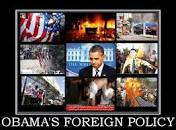
OBAMA FOREIGN POLICY

Journalistic organizations like PolitiFact, Factcheck.org and The Washington Post’s Fact Checker all rejected the contention that Mr. Obama was not referring to ISIS when he made his comment about JV teams.

Other statements by Mr. Obama look different today as well. When the president pulled American troops out of Iraq near the end of 2011 against the urging of some Republicans, he said the armed forces were “leaving behind a sovereign, stable and self-reliant Iraq with a representative government.”

Aides defended the conclusion, saying that was the president’s hope and it was up to the Iraqis to make good on that promise, an opportunity they squandered, leading to the emergence of ISIS as a major threat.

Just a few months before that, Mr. Obama told the United Nations that “the tide of war is receding.” Aides said that statement had to be viewed in the context of two wars fought with hundreds of thousands of American troops in Iraq and Afghanistan over the last 13 years. Even with new airstrikes in Iraq and potentially in Syria, they noted, just a fraction of those troops were still overseas.

Other statements that have come under fire lately include Mr. Obama’s comment setting a “red line” if the government of President Bashar al-Assad used chemical weapons against his people, which he eventually did. Mr. Obama vowed to retaliate but instead accepted a deal to remove and destroy Mr. Assad’s chemical weapons.

Just a month ago, Mr. Obama told Thomas L. Friedman, an op-ed columnist for The New York Times, that it had “always been a fantasy” to think that arming moderate rebels in Syria a few years ago would have made a difference in Syria. But now his emerging strategy for combating ISIS in Syria involves bolstering those same rebels rather than using American ground troops. Aides said Mr. Obama was referring to the rebels as they were three years ago, arguing that they have developed a lot since then.

Either way, Aaron David Miller, author of the forthcoming “The End of Greatness: Why America Can’t Have (and Doesn’t Want) Another Great President,” said Mr. Obama would have a real challenge selling his new approach to the public on Wednesday.

“Presidents rarely persuade through speeches, unless the words are rooted in context that seems real and credible,” Mr. Miller said. “Obama has a problem in this regard because his rhetoric has often gone beyond his capacity to deliver, especially on Syria.”

 isis

OBAMA DELAYS EXECUTIVE ORDERS ON AMNESTY UNTIL AFTER MID-TERM ELECTIONS

8 Sep

President Obama is delaying action on the immigration reform that he promised to take until after the November midterm elections, a White House official said Saturday.

Obama had promised to act by the end of summer, but with the elections looming, worried Senate Democrats have turned up the heat on him to postpone any action.

“The President has made clear that while nothing replaces Congress acting on comprehensive immigration reform, given the House Republicans’ refusal to act for over a year, the President will use his executive authority to take significant steps to reform our broken immigration system,” said a White House official.

National Guard troops patrol along the U.S. and Mexico border in Nogales, Ariz.JOSHUA LOTT/REUTERSNational Guard troops patrol along the U.S. and Mexico border in Nogales, Ariz.

The official added that Obama “wants to do this in a way that is sustainable for the long-term, that is most effective and good for the country,” and would commit to action before the end of the year.

The White House has blamed the Republicans for blocking the passage of comprehensive immigration reform.

EUO 3TPHANDOUT/REUTERSDeported women and their children arrive at the Ramon Villeda international airport in San Pedro Sula, Honduras, the city with the highest murder rate in the world.

“The reality the President has had to weigh is that we’re in the midst of the political season, and because of the Republicans’ extreme politicization of this issue, the President believes it would be harmful to the policy itself and to the long-term prospects for comprehensive immigration reform to announce administrative action before the elections,” the official said

IRS HAS LOST MORE E-MAILS…REALLY?

8 Sep

IRS Has Lost More E-mails . . .

 
It’s not just Lois Lerner’s e-mails. The Internal Revenue Service says it can’t produce e-mails from six more employees involved in the targeting of conservative groups, according to two Republicans investigating the scandal.

The IRS recently informed Ways and Means chairman Dave Camp and subcommittee chairman Charles Boustany that computer crashes resulted in additional lost e-mails, including from Nikole Flax, the chief of staff to former IRS commissioner Steven Miller, who was fired in the wake of the targeting scandal.

The revelation about Lerner’s e-mails rekindled the targeting scandal and today’s news has further inflamed Republicans. Camp and Boustany are now demanding a special prosecutor to investigate “every angle” of the events that led to Lois Lerner’s revelation in May 2013 that the agency had used inappropriate criteria to review the applications for tax exemption.

The lawmakers expressed particular outrage that the agency has known since February that it would not be able to produce the e-mails requested by the committee yet did not apprise the committee of that fact, and they charged in a statement that the IRS is attempting to “cover up the fact that it convenient lost key documents in the investigation.”

If Lerner is the central figure in the scandal — Oversight Committee chairman Darrell Issa said Monday evening he believes she was the senior-most official involved — Flax may be an important auxiliary figure. E-mails produced in response to a Freedom of Information Act request from the group Judicial Watch show Flax giving the green light to Lerner’s request to meet with Department of Justice officials to explore the possibility of criminally prosecuting nonprofit groups — at the suggestion of Democratic senator Sheldon Whitehouse — for engaging in political activity after declaring on their application for nonprofit status that they had no plans to do so.

irs

E-mails uncovered by the committee last week showed that, in preparation for her meeting with the Department of Justice, Lerner and one of her advisers transmitted 1.1 million pages of data on nonprofit groups, including confidential taxpayer information, to the Federal Bureau of Investigation, potentially in violation of federal law.

Mark Caserta: America should refocus on family

6 Sep

family 1

Sep. 04, 2014 @ 12:00 AM
 

How important is the family unit in our society?

Of the family, the late Rev. Jerry Falwell once said, “When you have a godly husband, a godly wife, children who respect their parents and who are loved by their parents, who provide for those children their physical and spiritual and material needs, lovingly, you have the ideal unit.”

Now God must have felt family structure was pretty important for the growth and development of a successful society. The very fact that He created man gives us reason to believe that He, himself, understood the need for relationships and the importance of family.

God instituted the family in Genesis 2:18 when He said, “It is not good that the man should be alone: I will make him an help meet for him.” He then formed Eve from a rib of Adam as told in verses 21-24, part of which says, “This is now bone of my bones, and flesh of my flesh: she shall be called Woman, because she was taken out of Man. Therefore shall a man leave his father and his mother, and shall cleave unto his wife: and they shall be one flesh.”

family 2

God’s purpose was to birth a family which would not only love each other, but with whom He would also enjoy a loving relationship. Psalm 103 says, “But the mercy of the Lord is from everlasting to everlasting … and his righteousness unto children’s children” by virtue of the family.

In Ephesians, God described “love” as the delineating “fruit of the Spirit” for nurturing a true family culture. “Husbands, love your wives, even as Christ also loved the church, and gave himself for it … That he might present it to himself a glorious church, not having spot, or wrinkle …”

While unrealistic in man’s eyes, with God, all things are possible.

family 3

But while God intended the family unit to be the foundation by which His people would acquire the propensity to lead healthy, prosperous, fruitful lives and have the ability to cope with life’s demands, the traditional family structure isn’t conducive to progressive ideology and is under siege by liberals seeking to undermine its Godly foundation.

Take for example, the “ABC Family” programming channel. Originally, The Christian Broadcasting Network “Family Channel,” the network was eventually sold to Disney in 2001 and renamed. The slogan, “A New Kind of Family,” denotes its intent to desensitize our youth to the troubled lifestyles of dysfunctional families.

Studies now show that less than half of American households now contain a traditional nuclear family — father, mother and children. And more than 40 percent of children are now born into households in which no father is present.

This decline of the family in America has compounded all of the other social problems plaguing our nation. Those who haven’t been nurtured in a loving family have a void that the world will gladly fill with dangerous alternatives. And for America, that’s spelled disaster.

Our nation’s tumult must be addressed at its very epicenter, the very nucleus of humanity — the family.

family 4

Mark Caserta is a conservative blogger, a Cabell County resident and a regular contributor to The Herald-Dispatch editorial page.

RADICAL ISLAMISTS IN SYRIA COULD BRING FIGHT TO U.S.

2 Sep

BY Yochi Dreazen

Yochi Dreazen is managing editor for news for Foreign Policy, overseeing a team of reporters covering national security, foreign policy, energy, diplomacy, and the global economy. He is also writer-in-residence at the Center for a New American Security, where he is working on a book about military suicide that will be published by Random House’s Crown division this October. The book, The Invisible Front: Love and Loss in the Era of Endless War, was the finalist for the J. Anthony Lukas Work-in-Progress Award, jointly awarded by the Columbia Journalism School and Harvard’s Nieman Foundation for Journalism.


Matthew Olsen, the director of the National Counterterrorism Center, told an audience at the Aspen Security Forum that the ranks of foreigners taking part in the war against Syrian strongman Bashar al-Assad now number at least 12,000, up from 7,000 a few months ago, including at least 1,000 Europeans and at least 100 Americans. Olsen said those estimates likely understate the actual numbers.

“The numbers are growing as the conflict there continues,” said Olsen, who has run the counterterrorism center for three years and is slated to step down later this year. “It remains a magnet for extremists around the world.”

Former FBI Director Robert Mueller, speaking on the same panel, said the intensifying conflict in the Gaza Strip threatened to further “fuel” the ranks of foreign fighters inside Syria. “It may contribute to the number of individuals who feel that they want to become part of the fight, but not necessarily in Gaza,” Mueller said.

Neither conflict shows any signs of slowing. Last week included the bloodiest 48-hour period to date in the three-year-old Syrian civil war, with an NGO monitoring the conflict estimating that more than 700 Syrians were killed on Thursday and Friday. More than 170,000 people have died in the conflict since it began in March 2011. Elsewhere in the region, violence flared in the West Bank Friday for the first time since the conflict between Israel and Hamas began in Gaza on July 8. At least five people were killed, pushing the Palestinian death toll to more 800. Israel has lost 35 people, including 33 soldiers.

For the moment, Syria poses the far greater threat to the United States. The Western fighters there on European and American passports could return home to carry out strikes far more easily than other militants could. Olsen said some of those 100 Americans have already come back to the United States, though he emphasized that the FBI is monitoring and tracking many of them.

The counterterrorism chief said that the U.S. intelligence community’s persistent difficulty in collecting detailed information about the fighting in Syria made it hard to trace the American and European militants once they made it to the battlefield.

Those challenges continue when the fighters return home. Olsen said it was difficult to identify and track those militants because they included both Syrians living in the United States and fighters from other ethnicities and nationalities. He said the Islamic State, which is leading the fighting in Syria, runs sophisticated English-language websites designed to help radicalize even larger numbers of Westerners and potentially convince them to join the battle.

Olsen said that once there, the militants would find a growing swath of territory inside both Syria and Iraq that is rapidly turning into a safe haven for militants interested in launching attacks both there and elsewhere in the world. He said there were senior al Qaeda leaders in Syria training foreign fighters and taking advantage of their ability to plan attacks elsewhere with little interference.

Syria, Olsen said, was providing safe havens that were starting “to be reminiscent of what we faced before 9/11 in Afghanistan.”

Domestic, Islamic vandals in U.S.?

1 Sep

3 Columbus churches vandalized with graffiti overnight 

koran vandalizes church

COLUMBUS, Ind. – Columbus Police said they’ve never had anything like it – three churches vandalized in the same night.

Someone spray painted them on the outside. It’s the words used, though, that have some people asking if this was more than a prank.

“It was just one word. It said ‘Infidels!’” Father Doug Marcotte said of what was spray painted on Saint Bartholomew’s Catholic Church in Columbus overnight Saturday.

Parishioners saw that, along with the word “Qur’an 3:151” on their way into mass Sunday morning.

“It’s certainly not a warm and fuzzy verse. It talks about the infidels, their refuge being the fire,” explained Father Marcotte.

Specifically, that passage of the Qur’an reads: “We will cast terror into the hearts of those who disbelieve for what they have associated with Allah of which He had not sent down [any] authority. And their refuge will be the Fire, and wretched is the residence of the wrongdoers.”

Saint Bartholomew’s wasn’t the only Columbus church vandalized.

“It’s really bizarre and the fact that they hit two other Christian Churches. It’s not like we’re all in a line. So why did they pick the three of us,” asked Father Marcotte.

Outside East Columbus Christian Church and Lakeview Church of Christ, members there found the same kind of graffiti Sunday morning.

“Is there somebody that really believes this that we’re all infidels so they felt the need to write it all over our church? “ asked Father Marcote. “Is this some sort of nasty prank? Is this someone that’s trying to incite people against Muslims? I mean I don’t know,” he added.

Columbus Police said they’re looking at surveillance video to help figure it out.

Until they do though, parishioners at Saint Bartholomew’s have been unsettled by the defacing of their church, at the very least.

“There’s a lot of bad stuff being done in the name of Allah and so when people see this happening in Columbus, whether that was truly the person’s intent or there’s something else going on, It makes people nervous. It makes people upset. It makes them scared,” said Father Marcotte.

Columbus police would not comment on whether they had alerted federal authorities to the vandalism because of its nature. The priests at Saint Bartholomew’s said they’ve been contacted by members of the local Muslim community in Columbus who have condemned the vandalism and offered to help clean it up.

Anyone with information is asked to call police.

Al Qaeda Calls for ‘preemptive jihad’ against USA…

31 Aug


 President Obama may not have a strategy for defeating the Islamic State, but the Islamic State has a strategy for the U.S. In fact, that strategy is set out, in part, in an al-Qaeda manual recently translated for the benefit of the U.S. military.

A guerrilla war proceeds in phases, according to Abd al-Aziz al-Muqrin’s A Practical Course for Guerrilla War, a strategic and tactical guide to mujahideen intent on establishing “a pure Islamic system free from defects and infidel elements.” It was written after the September 11, 2001, terrorist attacks.

The first phase is “attrition (strategic defense),” the time for carrying out attacks, “spectacular operations, which will create a positive impact.” The terrorists use the attacks as a recruitment tool and a morale boost for potential jihadis.

Phase two is the time of “relative strategic balance,” when the jihadis build an army to hold territory that has been wrested from the incumbent regime. “There the mujahidin will set up base camps, hospitals, sharia courts, and broadcasting stations, as well as a jumping-off point for military and political actions,” al-Muqrin writes.

The third phase, a time of internal discord and political upheaval for the “collaborationist” regime, is “decisive.” The terrorists use their conventional army to launch dramatic assaults.

“By means of these mujahadin conventional forces, the mujahidin will begin to attack smaller cities and exploit in the media their successes and victories in order to raise the morale of the mujahidin and the people in general and to demoralize the enemy,” al-Muqrin writes in a passage that brings to mind the Islamic State’s rampage across northern Iraq. “The reason for the mujahidin’s treating of smaller cities is that when the enemy’s forces see the fall of cities into the mujahidin’s hands with such ease their morale will collapse and they will become convinced that they are incapable of dealing with the mujahidin.”

Defense Secretary Chuck Hagel told reporters that the Islamic State “is beyond anything that we’ve seen.” That’s true insofar as al-Qaeda did not build a conventional army or declare itself a state. He shouldn’t be so surprised, though. The U.S. national-security apparatus has been following this jihadist ambition for years.

The manual, translated in 2008 by a research fellow at the Marine Corps University, shows how the Islamic State’s efforts to build an army and establish a caliphate reflect a longstanding goal. An Islamic caliphate has been al-Qaeda’s dream from the beginning. Using principles and tactics similar to al-Qaeda’s, the Islamic State has come closer to realizing that dream.

Al-Muqrin’s primary concern was to explain how al-Qaeda could wage war against the Saudi Arabian regime, but the text was intended as an education tool for jihadis in other areas as well. Discussing the book during an interview with National Review Online, Mary Habeck of the American Enterprise Institute noted a Reuters report (of July 8) on a notebook found at a former al-Qaeda “leadership camp” in Yemen. It’s almost certain that the al-Qaeda student who took those notes was being taught al-Muqrin’s ideas.

“This notebook has word for word” a paragraph from al-Muqrin’s book, “slightly differently translated by the two Arabic interpreters,” Habeck pointed out. Many of these terrorists, she explains, “have their intellectual and military roots in al-Qaeda, and this is what al-Qaeda is attempting to do.” The translator, Norman Cigar, wrote that al-​Muqrin’s ideas were disseminated to Iraqi insurgents as early as 2005.

The Islamic State “has a long history and an origin dating back to AQI, al-Qaeda in Iraq,” White House deputy national-security adviser Ben Rhodes reminded reporters. Obviously, Islamic State terrorists are not constantly referring to al-Muqrin’s book for their next move. Regardless, the manual itself warns, “One must be careful that these characteristics not become a rigid template or a ‘school solution,’ but rather, that they remain adaptable to circumstances in the region.”

Who’s paying the new Obamacare tax? You

31 Aug

So who’s surprised?

When Congress passed the Affordable Care Act, it required health insurers, hospitals, device makers and pharmaceutical companies to share in the cost because they would get a windfall of new, paying customers.

But with an $8 billion tax on insurers due Sept. 30 — the first time the new tax is being collected — the industry is getting help from an unlikely source: taxpayers.

States and the federal government will spend at least $700 million this year to pay the tax for their Medicaid health plans. The three dozen states that use Medicaid managed-care plans will give those insurers more money to cover the new expense. Many of those states — such as Florida, Louisiana and Tennessee — did not expand Medicaid as the law allows, and in the process turned down billions in new federal dollars.

Other insurers are getting some help paying the tax as well. Private insurers are passing the tax onto policyholders in the form of higher premiums. Medicare health plans are getting the tax covered by the federal government via higher reimbursement.

State Medicaid agencies say they have little choice but to pay the tax for health plans they hire to insure their poorest residents. That’s because the tax is part of the health plans’ costs of doing business. Federal law requires states to pay the companies adequate rates.

“This situation results in the federal government taxing itself and taxing state governments to fund the higher Medicaid managed care payments required to fund the ACA health insurer fee,” said a report by Medicaid Health Plans of America, a trade group.

Meanwhile, many Medicaid managed-care companies have seen their share prices — and profits — soar this year as they gained thousands of new customers through the health law in states that expanded Medicaid. More than half of the 66 million people on Medicaid are enrolled in managed-care plans.

AND THEN I TOLD THEM

STEEP COSTS FOR STATES

A KHN survey of some large state Medicaid programs found the tax will be costly this year. The estimates are based in part on the number of Medicaid health plan enrollees in each state and how much they are paid in premiums. States split the cost of Medicaid with the federal government, with the federal government paying, on average, about 57%.

• Florida anticipates the tax will cost $100 million, with the state picking up $40 million and the federal government, $60 million.

• Texas estimates the tax at $220 million, with the state paying $90 million and the federal government, $130 million.

• Tennessee anticipates it will owe $160 million, with the state paying $50 million and the federal government, $110 million.

• California budgeted $88 million, with the state paying $40 million and the federal government, $48 million.

• Georgia estimates the tax on its plans at $90 million, with the state paying $29 million and the federal government, $61 million.

• Pennsylvania predicts the tax will cost $139 million, with the state paying $64 million and the federal government, $75 million.

• Louisiana estimates the tax will cost $27 million, with the state paying $10 million and the federal government, $17 million.

Texas is believed to be the only state that has not yet agreed to cover the tax for its health plans, according to state Medicaid and health plan officials. “The premium tax is just another way that the costs of the Affordable Care Act are pushed down to states and families,” said Stephanie Goodman, spokeswoman for the Texas Medicaid program.

Medicaid officials in other states complain that paying the tax reduces money they could have spent on covering more services or paying providers.

 sebelius

DIMINISHING RETURNS?

“I do not feel I am getting anything in return for this,” said Tennessee Medicaid Director Darin Gordon.

Officials won’t know exactly how much states owe until the Internal Revenue Service sends bills to insurers at the end of August and the Medicaid plans submit those to states.

The health insurer tax is estimated to bring in at least $100 billion over the next decade from all insurers, government auditors estimate.

Most non-profit Medicaid health plans are exempt from the tax, which the trade group says gives the non-profits a competitive edge vying for state contracts. “We consider this tax so badly construed that it should be reconsidered because it makes no public policy sense,” said Jeff Myers, CEO of Medicaid Health Plans of America.

The trade group, which represents both non-profit and for-profit Medicaid plans, also opposes the tax because it takes money from Medicaid programs that could be used to pay plans to improve care, he said.

The Centers for Medicare & Medicaid Services declined to comment on how states and the federal government are covering part of the tax.

Timothy Jost, a consumer advocate and law professor at Washington & Lee University in Virginia, said the lawmakers intended to cover the costs of the law by including as many groups paying in as possible.

While it may be unusual for the federal government to essentially tax itself, Jost said, the situation is no different from the federal government paying a contractor to provide a service, then having that contractor use some of those dollars to pay state sales tax or federal income tax.

“This tax should not have surprised anyone, and it should have been worked into contract prices,” he said.

Paul Van de Water, senior fellow with the left-leaning Center for Budget and Policy Priorities, said neither health plans nor states should be complaining about the taxes because both are benefiting from the law.

“States are benefiting from the Affordable Care Act because with more people getting insured, it is driving down their uncompensated care costs,” he said. He noted that is true even in states that did not expand Medicaid under the health law.

“People always like to get a benefit and not have to pay for it,” he said. “If we did not have this tax, we would have had to raise the money somewhere else.”

3 YEARS LATER

Kaiser Health News is an editorially independent program of the Kaiser Family Foundation

SAUDI KING WARNS JIHADISTS WILL REACH WEST IN MONTHS

30 Aug

KING ABDULLA

Jeddah (Saudi Arabia) (AFP) – King Abdullah of Saudi Arabia has warned that the West will be the next target of the jihadists sweeping through Syria and Iraq, unless there is “rapid” action.

“If we ignore them, I am sure they will reach Europe in a month and America in another month,” he said in remarks quoted on Saturday by Asharq al-Awsat daily and Saudi-backed Al-Arabiya television station.

“Terrorism knows no border and its danger could affect several countries outside the Middle East,” said the king who was speaking at a welcoming ceremony on Friday for new ambassadors, including a new envoy from Saudi ally the United States.

The Islamic State (IS) jihadist group has prompted widespread concern as it advances in both Syria and Iraq, killing hundreds of people, including in gruesome beheadings and mass executions.

Lack of action would be “unacceptable” in the face of the phenomenon, King Abdullah said.

“You see how they (jihadists) carry out beheadings and make children show the severed heads in the street,” he said, condemning the “cruelty” of such acts.

“It is no secret to you, what they have done and what they have yet to do. I ask you to transmit this message to your leaders: ‘Fight terrorism with force, reason and (necessary) speed’.”

President Barack Obama has yet to decide whether the United States should launch raids against positions held by the Islamic State jihadist group in Syria to follow US air strikes on IS activities in Iraq.

US Secretary of State John Kerry called Friday for a global coalition to combat Islamic State fighters’ “genocidal agenda”.

Writing in the New York Times, Kerry said he and Defense Secretary Chuck Hagel will meet European counterparts on the sidelines of a NATO summit in Wales next week, to enlist assistance.

They will then travel on to the Middle East to build support “among the countries that are most directly threatened”.

“With a united response led by the United States and the broadest possible coalition of nations, the cancer of ISIS will not be allowed to spread to other countries,” Kerry said in Friday’s op-ed piece.

Asharq Al-Awsat said the king urged other countries to join the UN Counter-Terrorism Centre, set up in 2011 to respond to new threats, and to which Saudi Arabia has made a grant of $100 million