
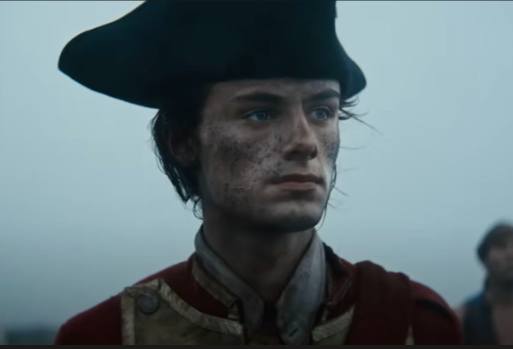
“Today, the threats to liberty do not come in the form of muskets and cannon fire, but they are very real.
They arrive quietly—through complacency, the steady erosion of constitutional freedoms, or the willingness to trade liberty for convenience, security, or political expediency.
Who are we to casually relinquish our freedoms brave men and women have died to protect?“
Young George Washington was suddenly awakened by the deafening roar of muskets and cannon fire. He had been unconscious, suffering from a severe case of dysentery, but the thunder of battle gave him the strength to rise and discover what was happening around him.
Having failed in his first military command against the French and their Native American allies, Washington had resigned his commission. Yet when the call came again, he volunteered to serve in any capacity he could, determined to do his part in defending the future of the New World.
Amid the thick powder smoke and chaos of battle, Washington mounted his horse to assess the situation.
“The battle is lost,” he was warned. “Turn back, Washington. Save yourself. It isn’t worth the risk.”
But George Washington knew his fellow soldiers were trapped on the front lines. He refused to abandon them. Instead, he spurred his horse toward the fiercest fighting, determined to lead from the front rather than seek safety in the rear.
History records that George Washington was remarkably protected that day. As bullets ripped through the air around him, he rode fearlessly across the battlefield, rallying frightened soldiers and helping as many as possible escape certain death. Though General Braddock’s army had been overwhelmed and the battle was ultimately lost, Washington’s courage prevented an even greater catastrophe.
With General Braddock mortally wounded and panic spreading through the ranks, Washington organized the retreat, encouraged his exhausted troops, and directed them to use the cover of the trees rather than continue fighting in the open. His calm leadership amid chaos saved countless lives and transformed what could have been a complete annihilation into an orderly withdrawal.
By the end of the battle, hundreds of brave men had sacrificed their lives at the Battle of the Monongahela, also known as Braddock’s Defeat. Yet George Washington emerged from the battlefield untouched, despite having two horses shot from beneath him and multiple bullet holes through his coat.
Many who witnessed the battle believed Divine Providence had preserved his life for a greater purpose—a purpose that would eventually lead him to command the Continental Army, guide a fledgling nation to independence, and become the first President of the United States.
Freedom has never been free. It never has been, and it never will be.
Our nation’s liberty was purchased with the courage, sacrifice, and blood of men and women who believed there were principles worth dying for. They understood that freedom is never guaranteed. It survives only when ordinary people are willing to stand against extraordinary odds.
George Washington could have turned his horse and ridden to safety. Instead, he rode into the battle.
That decision did more than save lives. It revealed the character of a man who would later lead a revolution and help establish the greatest experiment in self-government the world has ever known.
Every generation is called to defend freedom. Ours is no different. Who are we to casually relinquish our freedoms brave men and women have died to protect?
The question is not whether freedom will require sacrifice.
The question is whether we will have the courage to pay its price.
But given the right moves, even a pawn can take the King.


Leave a comment