
Tag Archives: Foreign Affairs

Mark Caserta: Leadership can make the US strong again

10 Apr

soldier

Apr. 10, 2014 @ 12:00 AM

Liberals are strikingly one-dimensional in their thinking about how other nations perceive America’s strength.

There are many ways the U.S. can become stronger domestically and internationally, non-militarily.

Progressives fail to understand that perception is reality in foreign affairs, and that “reality” can be the premise from which wars begin.

There is no doubt in the world theater that the United States is a dominating military power capable of monumental destruction. But, understand it isn’t what the U.S. is capable of doing that dictates the actions of world leaders; it’s what other countries perceive our government is “willing” to do that bridles international activity.

Given the potential impact of the United States on various international fronts, every nation of consequence is constantly monitoring the most current level of fortitude and “forthrightness” displayed by our leadership. And for liberals not to incorporate this reality into our political cogitation is extremely reckless and naïve.

Currently, the United States has been accurately assessed by friend and foe as being passive, indecisive, appeasing and less than deliberate in protecting its distinction as the beacon of democracy for the world.

Words without a disposition of determination are meaningless and, indeed, harmful to the safety of a nation. When the president of the United States openly draws a “red line” as Obama did for Syrian president Bashar al-Assad’s use of chemical weapons and then fails to keep his word, the entire world takes note.

And this administration is clueless in the rudimentary technique of negotiating from a position of strength — not good intentions. They seemingly have no concept of the conservative principle that the best military is one you “never have to use.”

Of the many U.S. contingencies assessed by foreign countries, beyond the plausibility of our leadership, are our assets and resources required to engage and sustain actions militarily or by sanction if necessary. Wars begin over land determined strategically important not only for military viability but also based on its available energy resources.

International perception of America’s strength has not only been compromised by inept leadership, but also by other nation’s discernment of America’s willingness to forego energy independence simply to protect the liberal ideology of man-made climate change.

America should immediately pursue an “all of the above” energy strategy rather than an “anything but fossil fuels” approach. The Keystone Pipeline is a no-brainer. Progressives have placed our nation on an unlevel energy playing field based upon a liberal ideology to which other nations are unwilling to conform.

Other strengthening measures must include tearing down the wall of government overreach preventing entrepreneurs from building businesses, hiring people and turning a profit.

This administration must also eliminate its divide-and-conquer class-warfare strategy and pursue policies that unite — not divide — Americans.

Obamacare must be repealed and replaced so America can begin to repair its healthcare system and economy.

And finally, our country needs a commander-in-chief who will patriotically work to protect the sovereignty of the United States and defend democracy.

America can become strong once again. All we need is leadership.

Mark Caserta is a conservative blogger, a Cabell County resident and a regular contributor to The Herald-Dispatch editorial page.
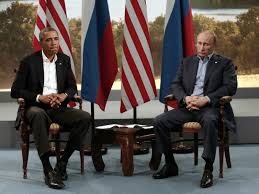
Mark Caserta: Dictators like Vladimir Putin only respect strength

27 Mar

putinMar. 27, 2014 @ 12:00 AM

President Obama once asked Vladimir Putin for “space” to focus on winning his 2012 re-election bid so he would be better “positioned” to “deal” on controversial issues.

While chatting with outgoing Russian president Dmitry Medvedev during the Nuclear Security Summit in Seoul, Korea, Obama said he would have “more flexibility” on issues such as missile defense after he secured the presidency.

Rolling cameras and hot microphones picked up the following “private” exchange as Obama leaned forward toward Medvedev:

President Obama: “On all these issues, but particularly missile defense, this, this can be solved but it’s important for him to give me space.”

President Medvedev: “Yeah, I understand. I understand your message about space. Space for you…”

President Obama: “This is my last election. After my election I have more flexibility.”

President Medvedev: “I understand. I will transmit this information to Vladimir.”

This exchange between presidential “comrades” captured by the White House press pool and Russian reporters characterizes the foreign policy appeasement strategy employed by Barack Obama.

Unfortunately, I believe we’re witnessing this president mirror mistakes eerily similar to the appeasement strategies offered by Western democracies in the 1930s that eventually put Adolf Hitler in a position to start World War II.

In what some have termed “moral cowardice,” Britain and France attempted to mitigate Germany’s demands through negotiation and compromise. But Hitler perceived this as weakness and was emboldened to heighten his aggression.

After seizing power in Germany, Hitler pursued a foreign policy thirsty for undoing the effects of the Treaty of Versailles, which banned him from re-arming his military and regaining territories lost at Versailles.

Hitler was desperate for more land, especially land rich in fossil fuels. And he was prepared to gamble that other European powers would be reluctant to go to war to stop him. He knew Europe’s economy was still recovering from World War I and military prowess had become secondary to bolstering social welfare programs.

As Hitler’s forces penetrated deeper into Poland, Great Britain and France were eventually forced to declare war on Germany, hence World War II.

Is Vladimir Putin, a man who once called the collapse of the Soviet Empire “the greatest geopolitical catastrophe of the century,” once again testing the backbone of Western democracy?

While Putin isn’t Hitler, he’s certainly ambitious enough and his potential for devastation is greater than anything the world has ever known.

Our nation was reminded of the dangers of liberal appeasement in Ronald Reagan’s “A Time for Choosing” speech in 1964.

“…Every lesson in history tells us that the greater risk lies in appeasement, as this is the specter our well-meaning liberal friends refuse to face — that their policy of accommodation is appeasement and it gives no choice between peace and war, only between fight and surrender. If we continue to accommodate, continue to back and retreat, eventually we have to face the final demand — the ultimatum. And what then?”

Appeasement has a bad track record. And untenable tyrants only view it as a sign of weakness.

Dictators like Vladimir Putin only respect strength.

Mark Caserta is a conservative blogger, a Cabell County resident and a regular contributor to The Herald-Dispatch editorial page.