Archive | TERRORISM RSS feed for this section

ISIS Isn’t Alone: Khorasan Group May Pose Bigger Threat to U.S.

25 Sep

isis 2

Pentagon: Khorasan Group in ‘Final Stages’ of Plots on ‘Western Targets’

Little is known about those militants — dubbed the “Khorasan group.” But in the week since their name hit the international stage, they’ve been billed as potentially an even bigger threat to the U.S. than ISIS. Here’s a look at what we know about the group whose existence was not publicly acknowledged until last week.

Where did they come from?

Intelligence analysts say Khorasan refers to battle-hardened al Qaeda fighters who have travelled from Afghanistan, Pakistan and elsewhere to Syria. Beyond that, accounts differ.

U.S. Central Command said the group was using civil war-ravaged Syria as a haven from which to plot attacks, build and test roadside bombs and recruit Westerners to carry out operations.

While Khorasan has been in operating in Syria for over a year, their attention has been focused beyond that country’s borders.

“They’re in Syria but they’re not really fighting in Syria,” said Michael Leiter, the former director of the National Counterterrorism Center and now an NBC News analyst. “They’re using it as a place to find Western recruits.”

Obama: Coalition Airstrikes a Sign World Is Against ISIS

The core group is believed to be small – probably no more than 100, according to Leiter. They have one main mission: To attack Western targets.

But isn’t there already an al Qaeda affiliate in Syria?

isis 9.22 b

Al Qaeda’s recognized affiliate in Syria is Jabhat al-Nusra – but that doesn’t mean there’s not room for Khorasan. Khorasan’s motivations are “very much in line” with traditional al Qaeda and it maintains close relations with Nusra, according to Leiter.

Intelligence analysts acknowledge disagreement over how separate or linked Nusra is to Khorasan. Still, the relationship appears to be symbiotic — Nusra focuses on internal operations within Syria, while Khorasan plans for external operations.

Why is the U.S. worried?

Director of National Intelligence James Klapper last week said that Khorasan poses a threat to the U.S. equal to that of ISIS, according to The Associated Press.

“Khorasan is less of a threat to the region and more of a threat to the U.S. homeland than ISIS,” Leiter said. “Unlike ISIS, the Khorasan group’s focus is not on overthrowing the Assad regime. These are core al Qaeda operatives who … are taking advantage of the Syrian conflict to advance attacks against Western interests.”

How could that happen?

Khorasan has been actively recruiting Westerners for plots against American and European interests, according to intelligence officials.

“They want to get Western recruits, with Western passports, to attack the West,” Leiter explained.

Fears are high that the group could exploit and capitalize on ties to al Qaeda in the Arabian Peninsula (AQAP) – and that affiliate’s sophisticated bomb makers.

Khorasan militants have been working with bomb makers from al Qaeda’s Yemen affiliate to test new ways to slip explosives past airport security, The Associated Press recently reported, citing classified U.S. intelligence assessments.

The AP said that the recent Transportation Security Administration ban on uncharged cellphones arose because of information that al Qaeda was working with Khorasan.

Who is leading the charge?

Muhsin al-Fadhli

A number of al Qaeda all-stars are believed to have migrated to Syria and put down Khorasan’s roots – but one name stands out: Muhsin al-Fadhli, a designated terrorist and apparent 9/11 insider.

The U.S. has a $7 million bounty on Al-Fadhli’s head – just shy of the $10 million offered for the capture of ISIS leader Abu Bakr al-Baghadi.

Al-Fadhli “was among the few trusted al Qaeda leaders who received advance notification that terrorists would strike the United States on September 11, 2001,” according to the State Department. It describes al-Fadhli as a veteran al Qaeda operative “who has been active for years.” Al-Fadhli is a wanted man in Kuwait and also on Saudi Arabia’s most-wanted list in connection with a series of terror attacks, according to the State Department.

Muhsin al-Fadhli, who is believed to play a role in the Khorasan group.

Born in Kuwait, al-Fadhli was first designated a terrorist by the U.S. Treasury Department in 2005 – deemed an al Qaeda leader in the Gulf and accused of supporting Iraq-based fighters in attacks against U.S. forces there. The State Department has later called al-Fadhli as “facilitator and financier” for al Qaeda who moved fighters and funds through Iran on behalf of the terrorist organization. Specifically, the State Department said he works to move fighters and funds through Turkey to back al Qaeda-linked groups in Syria – plus leverages his “extensive network of Kuwaiti jihadist donors” to send money to Syria.

Al-Fadhli also allegedly has helped moved fighters to North Africa and Europe, according to the State Department — underscoring the concern of European nations that foreign fighters will mount attacks on their home soil.

– Cassandra Vinograd

isis

President should not ignore military advisors

25 Sep

isis 9.22

Sep. 25, 2014 @ 06:55 AM

President Obama has certainly given the world plenty of reason to question his ability to address the war on terror.

Even as the administration received congressional backing for its strategy to arm and train Syrian opposition forces and has begun its expanded air strikes to “degrade and defeat” the Islamic State, military leaders have been critical of the president’s approach which has included rejecting advice from his top military commander in the Middle East.

Quoting two U.S. military officials, the Washington Post reported last week that Army Gen. Lloyd Austin, commander of U.S. Central Command (CENTCOM), said “that his best military advice was to send a modest contingent of American troops, principally Special Operations forces, to advise and assist Iraqi army units in fighting the militants.” Austin’s recommendation was taken to the White House by the chairman of the Joint Chiefs of Staff, Gen. Martin Dempsey. But the White House rejected CENTCOM’s “advise and assist” contingent due to the president’s concerns about placing U.S. ground forces in a frontline role.

Retired Marine Gen. James Mattis, who served under Obama until last year, told the House Intelligence Committee that a blanket prohibition on ground combat was tying the military’s hands. “Half-hearted or tentative efforts, or airstrikes alone, can backfire on us and actually strengthen our foes’ credibility,” he said. “We may not wish to reassure our enemies in advance that they will not see American boots on the ground.” Given Barack Obama’s unimpressive background, it’s unfathomable he could ignore the recommendations of tenured, military minds in such a volatile situation. Such poor judgment sets our military up for failure. And as the threat of terror looms nearer our borders, failure is not an option nor something on which to vacillate.

isis 2

In a chilling report on “The Kelly File” on Fox News, Trace Gallagher described an intelligence bulletin from the Central Florida Intelligence Exchange warning Islamic extremists are encouraging “lone wolf” terrorists to carry out random attacks on individuals on American soil. These attacks would be spontaneous, ambush-style attacks, similar to the machete attack of a British soldier in 2013.

In light of the ISIS savagery, Americans are worried the government isn’t doing enough to protect the homeland. A recent NBC/Wall Street Journal poll revealed nearly half of Americans believe our nation is less safe than it was before September 2001.

This president’s sluggish approach to the war on terror has emboldened Islamic jihadists to the point they may be compelled to bring their brutal style of cowardly attacks into theU.S. Andforathreatthat Obama’s advisors say is greater than that posed by al-Qaeda after 2001, his military strategy of “leading from behind” falls dangerously short in comparison to the “shock and awe” of the Bush administration when his surge strategy, led by Generals Petraeus and Odierno, defeated al Qaeda in Iraq.

Obama lacks the qualifications to ignore advice from his military commanders. His smug defiance, designed to placate Americans, is instead endangering them.

A President of the United States must take a frontline role in protecting U.S. citizens.

Mark Caserta is a conservative blogger, a Cabell County resident and a regular contributor to The Herald-Dispatch editorial page.

MILITARY AIR

New ISIS Recording Urges Muslims to Kill Civilians in US-Led Coalition Countries

22 Sep

 Sep 22, 2014, 6:24 AM ET

By BRIAN ROSS and ANTHONY CASTELLANO

isis 9.22

A 42-minute audio recording by an ISIS spokesman was released on social media Sunday, in which the group calls on Muslims to kill civilians in countries that belong to the anti-ISIS, U.S.-led coalition.

“If you can kill a disbelieving American or European, especially the spiteful and filthy French, or an Australian, or a Canadian or any other disbeliever, then rely upon Allah, and kill him in any manner or way however it may be,” an ISIS spokesman says.

This latest threat comes as the Islamic State group posts new pictures of some of its British recruits, and President Obama heads to the UN to seek an international effort to stop such ISIS fighters from traveling unimpeded to spread their war of terror.

But U.S. Ambassador to the United Nations Samantha Power Sunday told George Stephanopoulos on “This Week,” stopping the threat from ISIS and its fighters won’t happen anytime soon.

“We think again the strategy can succeed, and most importantly that we have the greatest military in the world, they believe that,” Power said. “I think the president has said it will be over several years.”

U.S. and British authorities this morning are also bracing for word on the fate of ISIS hostage Alan Henning.

The White House declined to comment on the new recording today.

Over the weekend there were new pleas for mercy from his wife and from leaders of the Muslim community, even al Qaeda, that he be spared because the one time British taxi driver only went to Syria as a driver for an Islamic relief mission.

isis 9.22 b

NEW YORK TIMES : A President Whose Assurances Have Come Back to Haunt Him

9 Sep

 ISLAMIC STATE IN BLACK

WASHINGTON — When President Obama addresses the nation on Wednesday to explain his plan to defeat Islamic extremists in Iraq and Syria, it is a fair bet he will not call them the “JV team.”

Nor does he seem likely to describe Iraq as “sovereign, stable and self-reliant” with a “representative government.” And presumably he will not assert after more than a decade of conflict that “the tide of war is receding.”

As he seeks to rally Americans behind a new military campaign in the Middle East, Mr. Obama finds his own past statements coming back to haunt him. Time and again, he has expressed assessments of the world that in the harsh glare of hindsight look out of kilter with the changed reality he now confronts.

To Mr. Obama’s critics, the disparity between the president’s previous statements and today’s reality reflects not simply poorly chosen words but a fundamentally misguided view of the world. Rather than clearly see the persistent dangers as the United States approaches the 13th anniversary of the Sept. 11, 2001, terrorist attacks, they said, Mr. Obama perpetually imagines a world as he wishes it were.

“I don’t think it is just loose talk, I think it’s actually revealing talk,” said Peter H. Wehner, a former adviser to President George W. Bush now at the Ethics and Public Policy Center. “Sometimes words are mistakes; they’re just poorly put. But sometimes they’re a manifestation of one’s deep belief in the world and that’s what you really get with President Obama.” .

White House officials said the president’s opponents distorted what he said to score political points or hold him responsible for evolving events that were not foreseen. They also say Mr. Obama’s past statements are hardly on a scale of Mr. Bush’s unfounded assertions about Saddam Hussein’s weapons of mass destruction, not to mention Mr. Bush’s May 2003 speech in front of a banner that said “Mission Accomplished,” meant to signal an end to the major combat in Iraq.

“There is context or facts that explain what the president meant at the time, or things change over the course of time,” said Dan Pfeiffer, a senior adviser to Mr. Obama. “The people who try to beat us up over these things will continue to do so.”

The comment that has caused Mr. Obama the most grief in recent days was his judgment about groups like ISIS. In an interview last winter with David Remnick of The New Yorker, Mr. Obama sought to make the point that not every terrorist group is a threat like Al Qaeda, requiring extraordinary American action.

“The analogy we use around here sometimes, and I think is accurate, is if a JV team puts on Lakers uniforms, that doesn’t make them Kobe Bryant,” Mr. Obama told Mr. Remnick. He drew a distinction between Al Qaeda and “jihadists who are engaged in various local power struggles and disputes, often sectarian.”

Asked about that by Chuck Todd on “Meet the Press” last weekend, Mr. Obama denied that he necessarily meant ISIS. “Keep in mind I wasn’t specifically referring to ISIL,” he said, using an alternate acronym for the group.

“I’ve said that regionally, there were a whole series of organizations that were focused primarily locally — weren’t focused on homeland, because I think a lot of us, when we think about terrorism, the model is Osama bin Laden and 9/11,” Mr. Obama said. And some groups evolve, he noted. “They’re not a JV team,” he added of ISIS.

But the transcript of the New Yorker interview showed that Mr. Obama made his JV team comment directly after being asked about terrorists in Iraq, Syria and Africa, which would include ISIS. After Mr. Obama’s initial answer, Mr. Remnick pointed out that “that JV team just took over Fallujah,” a city in western Iraq seized by ISIS. Mr. Obama replied that terrorism in many places around the world was not necessarily “a direct threat to us or something that we have to wade into.”

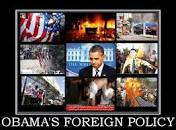
OBAMA FOREIGN POLICY

Journalistic organizations like PolitiFact, Factcheck.org and The Washington Post’s Fact Checker all rejected the contention that Mr. Obama was not referring to ISIS when he made his comment about JV teams.

Other statements by Mr. Obama look different today as well. When the president pulled American troops out of Iraq near the end of 2011 against the urging of some Republicans, he said the armed forces were “leaving behind a sovereign, stable and self-reliant Iraq with a representative government.”

Aides defended the conclusion, saying that was the president’s hope and it was up to the Iraqis to make good on that promise, an opportunity they squandered, leading to the emergence of ISIS as a major threat.

Just a few months before that, Mr. Obama told the United Nations that “the tide of war is receding.” Aides said that statement had to be viewed in the context of two wars fought with hundreds of thousands of American troops in Iraq and Afghanistan over the last 13 years. Even with new airstrikes in Iraq and potentially in Syria, they noted, just a fraction of those troops were still overseas.

Other statements that have come under fire lately include Mr. Obama’s comment setting a “red line” if the government of President Bashar al-Assad used chemical weapons against his people, which he eventually did. Mr. Obama vowed to retaliate but instead accepted a deal to remove and destroy Mr. Assad’s chemical weapons.

Just a month ago, Mr. Obama told Thomas L. Friedman, an op-ed columnist for The New York Times, that it had “always been a fantasy” to think that arming moderate rebels in Syria a few years ago would have made a difference in Syria. But now his emerging strategy for combating ISIS in Syria involves bolstering those same rebels rather than using American ground troops. Aides said Mr. Obama was referring to the rebels as they were three years ago, arguing that they have developed a lot since then.

Either way, Aaron David Miller, author of the forthcoming “The End of Greatness: Why America Can’t Have (and Doesn’t Want) Another Great President,” said Mr. Obama would have a real challenge selling his new approach to the public on Wednesday.

“Presidents rarely persuade through speeches, unless the words are rooted in context that seems real and credible,” Mr. Miller said. “Obama has a problem in this regard because his rhetoric has often gone beyond his capacity to deliver, especially on Syria.”

 isis

Domestic, Islamic vandals in U.S.?

1 Sep

3 Columbus churches vandalized with graffiti overnight 

koran vandalizes church

COLUMBUS, Ind. – Columbus Police said they’ve never had anything like it – three churches vandalized in the same night.

Someone spray painted them on the outside. It’s the words used, though, that have some people asking if this was more than a prank.

“It was just one word. It said ‘Infidels!’” Father Doug Marcotte said of what was spray painted on Saint Bartholomew’s Catholic Church in Columbus overnight Saturday.

Parishioners saw that, along with the word “Qur’an 3:151” on their way into mass Sunday morning.

“It’s certainly not a warm and fuzzy verse. It talks about the infidels, their refuge being the fire,” explained Father Marcotte.

Specifically, that passage of the Qur’an reads: “We will cast terror into the hearts of those who disbelieve for what they have associated with Allah of which He had not sent down [any] authority. And their refuge will be the Fire, and wretched is the residence of the wrongdoers.”

Saint Bartholomew’s wasn’t the only Columbus church vandalized.

“It’s really bizarre and the fact that they hit two other Christian Churches. It’s not like we’re all in a line. So why did they pick the three of us,” asked Father Marcotte.

Outside East Columbus Christian Church and Lakeview Church of Christ, members there found the same kind of graffiti Sunday morning.

“Is there somebody that really believes this that we’re all infidels so they felt the need to write it all over our church? “ asked Father Marcote. “Is this some sort of nasty prank? Is this someone that’s trying to incite people against Muslims? I mean I don’t know,” he added.

Columbus Police said they’re looking at surveillance video to help figure it out.

Until they do though, parishioners at Saint Bartholomew’s have been unsettled by the defacing of their church, at the very least.

“There’s a lot of bad stuff being done in the name of Allah and so when people see this happening in Columbus, whether that was truly the person’s intent or there’s something else going on, It makes people nervous. It makes people upset. It makes them scared,” said Father Marcotte.

Columbus police would not comment on whether they had alerted federal authorities to the vandalism because of its nature. The priests at Saint Bartholomew’s said they’ve been contacted by members of the local Muslim community in Columbus who have condemned the vandalism and offered to help clean it up.

Anyone with information is asked to call police.

Al Qaeda Calls for ‘preemptive jihad’ against USA…

31 Aug


 President Obama may not have a strategy for defeating the Islamic State, but the Islamic State has a strategy for the U.S. In fact, that strategy is set out, in part, in an al-Qaeda manual recently translated for the benefit of the U.S. military.

A guerrilla war proceeds in phases, according to Abd al-Aziz al-Muqrin’s A Practical Course for Guerrilla War, a strategic and tactical guide to mujahideen intent on establishing “a pure Islamic system free from defects and infidel elements.” It was written after the September 11, 2001, terrorist attacks.

The first phase is “attrition (strategic defense),” the time for carrying out attacks, “spectacular operations, which will create a positive impact.” The terrorists use the attacks as a recruitment tool and a morale boost for potential jihadis.

Phase two is the time of “relative strategic balance,” when the jihadis build an army to hold territory that has been wrested from the incumbent regime. “There the mujahidin will set up base camps, hospitals, sharia courts, and broadcasting stations, as well as a jumping-off point for military and political actions,” al-Muqrin writes.

The third phase, a time of internal discord and political upheaval for the “collaborationist” regime, is “decisive.” The terrorists use their conventional army to launch dramatic assaults.

“By means of these mujahadin conventional forces, the mujahidin will begin to attack smaller cities and exploit in the media their successes and victories in order to raise the morale of the mujahidin and the people in general and to demoralize the enemy,” al-Muqrin writes in a passage that brings to mind the Islamic State’s rampage across northern Iraq. “The reason for the mujahidin’s treating of smaller cities is that when the enemy’s forces see the fall of cities into the mujahidin’s hands with such ease their morale will collapse and they will become convinced that they are incapable of dealing with the mujahidin.”

Defense Secretary Chuck Hagel told reporters that the Islamic State “is beyond anything that we’ve seen.” That’s true insofar as al-Qaeda did not build a conventional army or declare itself a state. He shouldn’t be so surprised, though. The U.S. national-security apparatus has been following this jihadist ambition for years.

The manual, translated in 2008 by a research fellow at the Marine Corps University, shows how the Islamic State’s efforts to build an army and establish a caliphate reflect a longstanding goal. An Islamic caliphate has been al-Qaeda’s dream from the beginning. Using principles and tactics similar to al-Qaeda’s, the Islamic State has come closer to realizing that dream.

Al-Muqrin’s primary concern was to explain how al-Qaeda could wage war against the Saudi Arabian regime, but the text was intended as an education tool for jihadis in other areas as well. Discussing the book during an interview with National Review Online, Mary Habeck of the American Enterprise Institute noted a Reuters report (of July 8) on a notebook found at a former al-Qaeda “leadership camp” in Yemen. It’s almost certain that the al-Qaeda student who took those notes was being taught al-Muqrin’s ideas.

“This notebook has word for word” a paragraph from al-Muqrin’s book, “slightly differently translated by the two Arabic interpreters,” Habeck pointed out. Many of these terrorists, she explains, “have their intellectual and military roots in al-Qaeda, and this is what al-Qaeda is attempting to do.” The translator, Norman Cigar, wrote that al-​Muqrin’s ideas were disseminated to Iraqi insurgents as early as 2005.

The Islamic State “has a long history and an origin dating back to AQI, al-Qaeda in Iraq,” White House deputy national-security adviser Ben Rhodes reminded reporters. Obviously, Islamic State terrorists are not constantly referring to al-Muqrin’s book for their next move. Regardless, the manual itself warns, “One must be careful that these characteristics not become a rigid template or a ‘school solution,’ but rather, that they remain adaptable to circumstances in the region.”

NEW MOST WANTED, FUTURE DEAD TERRORIST

25 Aug

TERRORISTS


http://www.news.com.au/world/london-hiphop-artist-abdelmajed-abdel-bary-key-suspect-in-hunt-for-killer-of-american-journalist-james-foley/story-fndir2ev-1227034541900

Yesterday, British security services MI5 and MI6 reportedly identified a British hip-hop artist as the key suspect in the hunt for the killer who beheaded Foley.

The Sunday Times newspaper said Abdel-Majed Abdel Bary, from Maida Vale in West London, had become a crucial part of the investigation.

The paper attributed the information to “senior government sources.”

Bary, 23, is the son of an Egyptian-born militant who is awaiting trial on terror charges in New York tied to the deadly 1998 bombings of embassies in Kenya and Tanzania.

Former hostages held by ISIS have said he is one of several jihadists they nicknamed “the Beatles” due to their British accents, with two of his cronies referred to as “George” and “Ringo.”

Bary — who recently tweeted a photo of himself holding up a severed head — was among three Brits identified as possibly being the masked killer known as “John”.

In June, The Sunday Times revealed a threat made by Bary on Twitter. “The lions are coming for you soon you filthy kuffs (infidels),” he wrote. “Beheadings in your own backyard soon.”

Bary, who went to Syria last year to fight in its bloody civil war, has a build, skin tone and ­accent all similar to those of “John,” according to The Telegraph.

Before becoming a jihadist, he was an aspiring rapper known as “L Jinny,” whose music was played on BBC Radio 1.